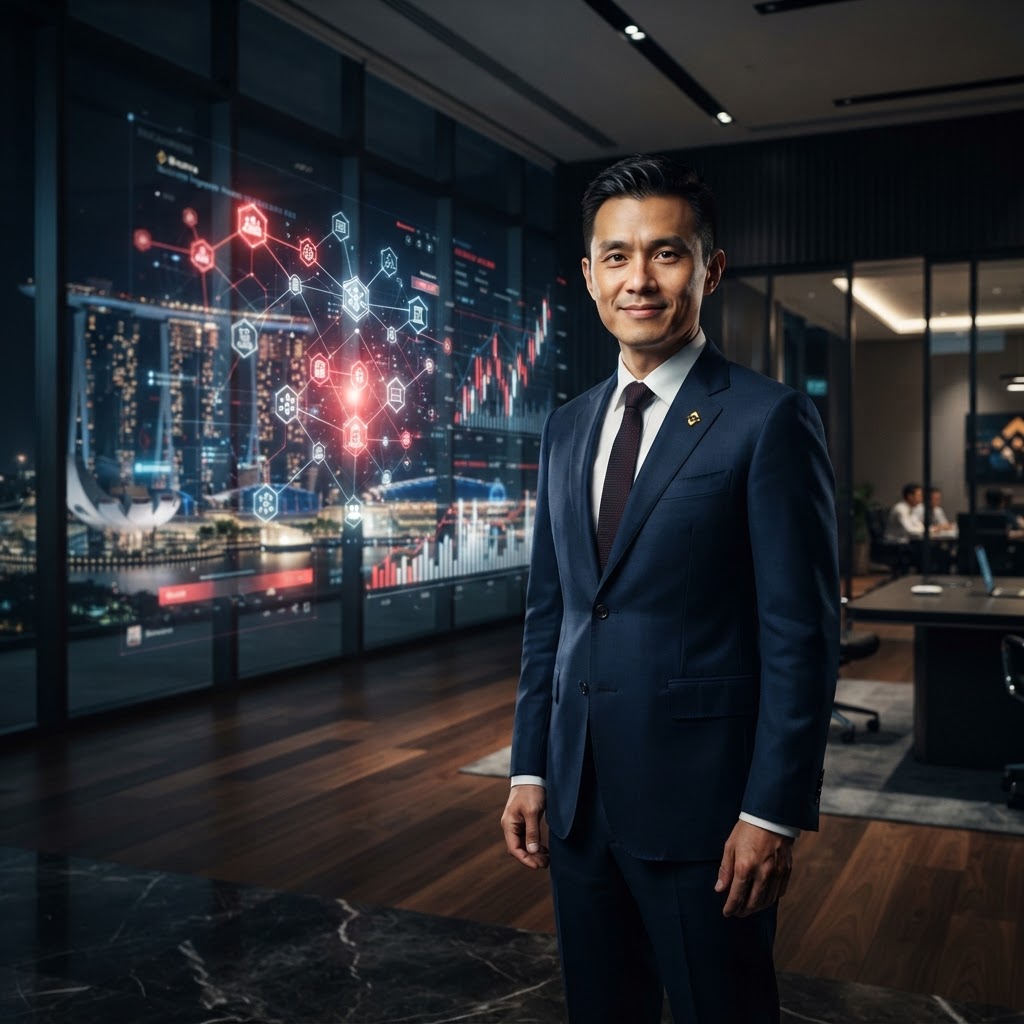
The transition of leadership at the world’s largest cryptocurrency exchange marked one of the most significant turning points in the history of the digital asset industry. When Richard Teng stepped into the role of CEO at Binance, he did not just inherit a company; he inherited a global financial phenomenon at a crossroads. Following the departure of the charismatic founder Changpeng Zhao (CZ), the industry watched with bated breath to see if the exchange could survive the weight of a multi-billion dollar settlement with the U.S. Department of Justice and the intense scrutiny of global regulators. Teng, a veteran with a background that spans three decades in financial services and regulatory oversight, was not just a logical choice; he was perhaps the only choice capable of steering the ship through such turbulent waters.
The Pedigree of a Regulator
Richard Teng’s journey to the helm of Binance is rooted in a deep understanding of how traditional finance and emerging technologies intersect. Before entering the crypto space, Teng spent thirteen years at the Monetary Authority of Singapore (MAS), where he played a crucial role in developing Singapore’s reputation as a world-class financial hub. This experience gave him a unique perspective on the necessity of oversight and the delicate balance required to foster innovation without compromising market integrity. His subsequent tenure at the Singapore Exchange (SGX) as Chief Regulatory Officer further solidified his reputation as a man who understands the plumbing of global markets. However, it was his role as the CEO of the Financial Services Regulatory Authority at Abu Dhabi Global Market (ADGM) that truly showcased his ability to build frameworks for the future. Under his leadership, ADGM became one of the first jurisdictions in the world to implement a comprehensive regulatory framework for digital assets, attracting global players and setting a standard for others to follow.
The Binance Evolution: From Startup to Institution
When Teng joined Binance in 2021, initially to lead its Singapore operations and later its regional markets, the exchange was still operating with a startup mentality that prioritized speed and scale. The environment was characterized by a ‘move fast and break things’ ethos that, while successful in capturing market share, had created friction with regulators worldwide. Teng’s arrival signaled a shift in the corporate DNA. He began the arduous task of professionalizing the organization’s approach to compliance. Since taking the CEO chair, this evolution has accelerated. Teng has been vocal about the fact that the ‘Binance 1.0’ era of rapid, unregulated expansion is over. The dawn of ‘Binance 2.0’ is defined by transparency, institutional-grade security, and a proactive relationship with watchdogs. In his first few months as CEO, Teng emphasized that the exchange is no longer a rogue disruptor but a mature financial institution that recognizes the importance of working within established legal frameworks.
Restructuring for the Future
One of Teng’s most significant early moves was the formalization of Binance’s corporate structure. For years, the lack of a defined global headquarters was a point of contention for regulators. Teng has moved to address this by establishing a Board of Directors, a move that introduces a layer of corporate governance previously absent. This board, chaired by Gabriel Abed, includes independent directors who bring external perspectives to the company’s strategy. This restructuring is more than just cosmetic; it represents a commitment to the kind of accountability that institutional investors demand. Teng has often remarked that for crypto to achieve mass adoption, it must shed its ‘Wild West’ image. “We are transforming from a tech-led startup to a financial services-led institution,” Teng stated during a recent industry keynote. “This means we have to embrace the same rigors of compliance, audits, and governance that define the world’s leading banks.”
The Compliance-First Growth Strategy
Under Teng’s leadership, Binance has significantly increased its investment in compliance infrastructure. The company has hired hundreds of specialists, many of whom are former law enforcement officers and regulatory experts. This ‘compliance-first’ approach is not just about staying out of trouble; it is a strategic move to unlock new markets. By securing licenses in jurisdictions like Dubai, Thailand, and various European nations under the MiCA (Markets in Crypto-Assets) framework, Binance is positioning itself as the primary gateway for both retail and institutional capital. Teng’s ability to speak the language of regulators has been instrumental in these negotiations. He approaches these conversations not as an adversary, but as a partner interested in protecting users and ensuring market stability. This diplomatic approach has already started to pay dividends, as evidenced by the exchange’s successful return to markets where it previously faced bans or warnings.
Institutional Trust and Market Stability
The crypto industry has long struggled with the perception of being a volatile and opaque market. Teng recognizes that the next wave of growth will be driven by institutional players—pension funds, asset managers, and corporate treasuries. These entities require a level of trust that can only be built through rigorous transparency. To this end, Teng has championed the refinement of Binance’s Proof of Reserves system, ensuring that user assets are backed 1:1 and are easily verifiable. He has also focused on enhancing the exchange’s liquidity, ensuring that even during periods of extreme market stress, Binance remains a reliable venue for price discovery. Market analysts have noted that since Teng took over, the tone of Binance’s communications has become more measured and professional, which has helped stabilize user sentiment during an era of significant regulatory transition.
Innovation in the Shadow of Regulation
While compliance is the priority, Teng has not allowed innovation to stagnate. He remains a firm believer in the transformative power of Web3 and blockchain technology. Under his guidance, Binance continues to expand its ecosystem, focusing on decentralized finance (DeFi), gaming, and the integration of artificial intelligence into crypto trading tools. Teng views regulation not as a hurdle to innovation, but as the tracks on which the train of innovation must run. By providing a clear and stable environment, he believes that developers and entrepreneurs can build more sustainable products. He is particularly focused on how blockchain can improve financial inclusion in emerging markets, a cause he has supported throughout his career. By leveraging Binance’s massive reach, Teng aims to provide millions of unbanked individuals with access to low-cost financial services through the power of stablecoins and peer-to-peer lending platforms.
The Cultural Shift Within
Perhaps the most challenging part of Teng’s role has been managing the internal cultural shift at Binance. The company’s remote-first, high-pressure environment was built around the vision of its founder. Teng has had to maintain the high performance and agility that made Binance successful while introducing a more structured and risk-aware culture. This involves constant communication with a global workforce of thousands. Teng has introduced more frequent town halls and internal transparency initiatives to ensure that every employee understands the new direction. He often speaks about the ‘fiduciary responsibility’ the company has toward its users, a term more common in the halls of Wall Street than in the crypto Discord servers of the past. This shift in mindset is crucial for the long-term sustainability of the platform, as it aligns the interests of the employees with the safety of the users.
The Global Regulatory Landscape
As the industry moves toward more comprehensive global standards, Richard Teng is often found at the center of the conversation. He is a frequent participant in international forums, advocating for a harmonized approach to crypto regulation. He argues that a fragmented regulatory landscape creates opportunities for bad actors to engage in jurisdictional arbitrage, which harms the entire ecosystem. Teng’s vision is one where major economies cooperate to create a level playing field, where innovation can flourish and consumers are protected regardless of where they are located. His background at MAS and ADGM makes him a credible voice in these discussions, as he has seen firsthand how effective regulation can drive economic growth. For Binance, this means not just reacting to new laws, but actively helping to shape the policies that will define the future of money.
Defining a New Legacy
Richard Teng’s tenure as CEO will likely be defined by how well he manages the paradox of being a compliant giant in a decentralized world. He is tasked with proving that a centralized exchange can be a responsible steward of the crypto revolution. As the legal challenges of the past are settled and the industry matures, the focus is shifting to the next decade of growth. Teng’s steady hand and regulatory expertise have provided Binance with a second act that many thought was impossible. By bridging the gap between the traditional financial world and the frontier of digital assets, Teng is not just leading a company; he is helping to legitimize an entire asset class. The road ahead remains complex, with new technological and regulatory challenges appearing at every turn, but the foundation Teng is building suggests that Binance is ready to face them as a pillar of the global financial system.