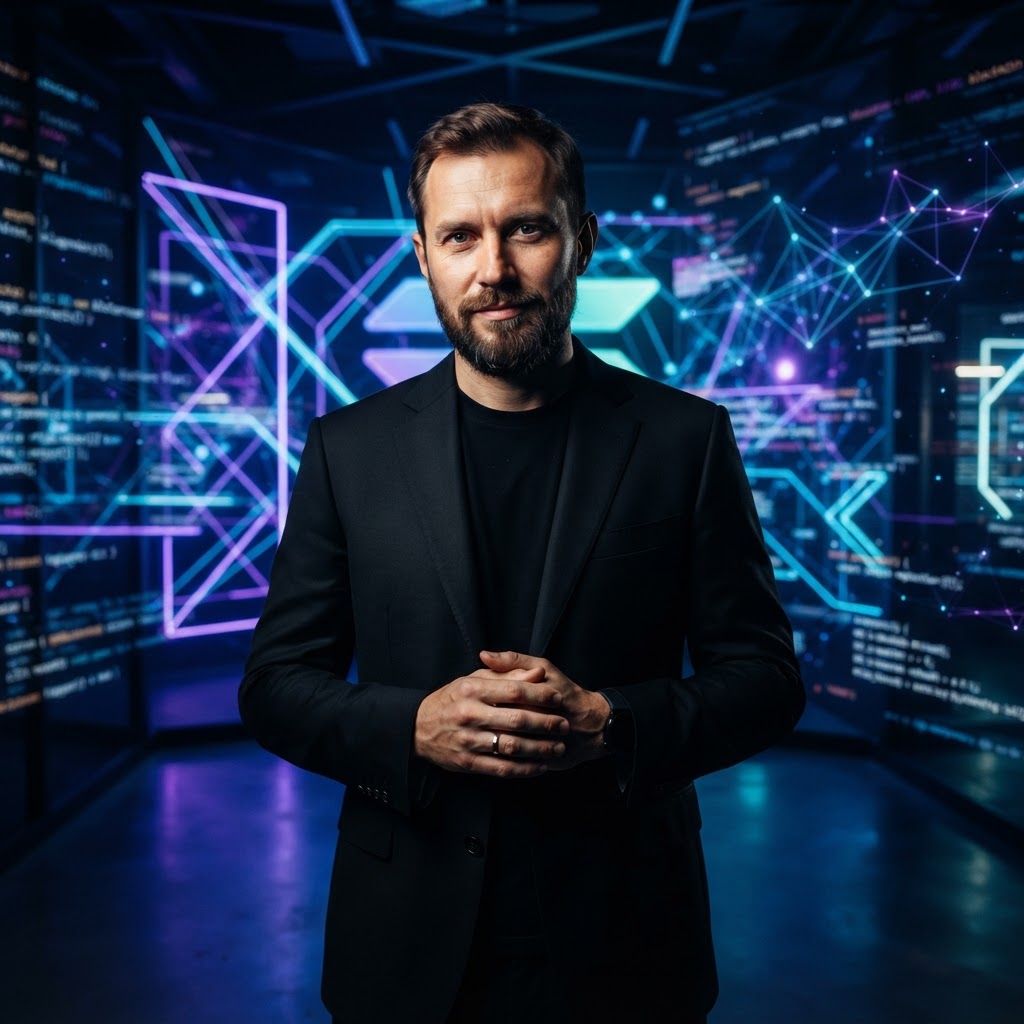
In the high-stakes world of blockchain development, few names carry as much weight as Anatoly Yakovenko. As the co-founder and CEO of Solana Labs, Yakovenko has spent the last several years architecting a network that challenges the very foundations of how decentralized systems handle data and consensus. While the broader crypto industry often focuses on the speculative nature of assets, Yakovenko remains a quintessential engineer, obsessed with throughput, latency, and the raw efficiency of the distributed ledger. His journey from a childhood in the Soviet Union to the heart of Silicon Valley is more than a personal success story; it is the blueprint for a technological revolution that has placed Solana at the forefront of the Web3 era.
The Qualcomm Influence and the Genesis of Speed
Yakovenko’s professional DNA was forged during his twelve-year tenure at Qualcomm, where he specialized in operating systems and distributed systems. At the semiconductor giant, he learned the intricacies of hardware-software integration, a skill set that would later differentiate Solana from its competitors. During his time there, he led development for some of the world’s most advanced mobile technologies, gaining a deep understanding of how to squeeze every ounce of performance out of a processor. This period was fundamental; it taught him that the primary bottleneck in any complex system is usually not the hardware itself, but how the software manages the flow of information across that hardware. In 2017, this realization led to a ‘caffeine-induced’ moment of clarity. Yakovenko hypothesized that if a blockchain could have a reliable clock, it would dramatically simplify the consensus process, allowing the network to scale far beyond the limits of Ethereum or Bitcoin.
The “Eureka” Moment: Proof of History
The concept that would define Yakovenko’s career is Proof of History (PoH). In traditional blockchains, nodes must communicate with each other constantly to agree on when a transaction occurred, leading to significant overhead and slow confirmation times. Yakovenko’s breakthrough was to create a Verifiable Delay Function (VDF) that acts as a decentralized clock. By hashing the output of one event into the input of the next, PoH creates a historical record that proves that an event occurred at a specific moment in time. “The goal was never just to build another blockchain; it was to build a global state machine that operates at the speed of light,” Yakovenko recently remarked during a developer summit. By decoupling the passage of time from the consensus mechanism itself, Solana allows nodes to continue processing transactions without waiting for the entire network to sync up first, leading to its trademark speeds of over 50,000 transactions per second.
Weathering the FTX Storm and the Resilience of the Network
Perhaps the most significant test of Yakovenko’s leadership came during the collapse of the FTX exchange in late 2022. Because Sam Bankman-Fried had been a vocal supporter and significant investor in the Solana ecosystem, the fallout was catastrophic for the SOL token’s price and public perception. Many analysts predicted the death of the network as the ecosystem’s TVL (Total Value Locked) plummeted. However, Yakovenko’s response was characteristically pragmatic. He doubled down on the developer community, encouraging those who were there for the technology rather than the hype. “The hardest part of the FTX collapse wasn’t the price action; it was the noise,” Yakovenko stated in a candid interview. “We had to prove that the technology didn’t care about who bought the tokens. The code keeps running regardless of the liquidations happening on centralized exchanges.” This period of adversity filtered out the speculators, leaving behind a core group of engineers who would fuel the “Solana Summer” of 2023 and 2024, proving that the network’s fundamentals were decoupled from its most famous benefactor.
A Community-Led Resurgence
The recovery of Solana was not just a financial one; it was a cultural shift. Under Yakovenko’s guidance, the community pivoted toward high-utility applications, from decentralized physical infrastructure networks (DePIN) like Helium and Hivemapper to the explosive growth of the NFT and memecoin markets. This resurgence was built on the back of Solana’s low fees and high speed, which made it the only viable playground for micro-transactions and high-frequency trading. Yakovenko has often emphasized that for crypto to go mainstream, it must be invisible. It needs to work so fast and so cheaply that the user doesn’t even realize they are interacting with a blockchain. This philosophy led to the Only Possible On Solana (OPOS) movement, highlighting use cases that simply cannot exist on slower, more expensive Layer 1s.
The Hardware Frontier: Solana Mobile and Beyond
One of Yakovenko’s most ambitious and controversial moves was the launch of the Solana Saga, a blockchain-integrated smartphone. Critics initially mocked the idea, questioning why a software company would enter the notoriously difficult hardware market dominated by Apple and Google. Yet, the Saga—and its successor, the Seeker—served a specific purpose in Yakovenko’s grand strategy: breaking the monopoly of centralized app stores. By creating a device with a built-in seed vault and a dApp store that doesn’t take a 30% cut, Yakovenko is attempting to give the power back to developers and users. “Mobile is where the world lives, and if crypto doesn’t have a native mobile experience, it will always be a niche hobby,” he argued. The success of the Saga, fueled partly by the distribution of the BONK airdrop to device holders, turned a perceived failure into a marketing masterstroke that solidified the link between hardware and decentralized identity.
Firedancer and the Quest for 1 Million TPS
Looking toward the future, Yakovenko is heavily focused on the development of Firedancer, a new independent validator client for Solana being built by Jump Crypto. For years, one of the primary criticisms of Solana was its reliance on a single validator client, which posed a risk to network stability. Firedancer, written from scratch in C++, aims to fix this while simultaneously pushing the hardware limits even further. Yakovenko sees Firedancer as the ultimate validation of his vision. In recent technical forums, he has discussed how this new client could potentially bring Solana’s throughput to over one million transactions per second. This is not just a vanity metric; it is about providing the bandwidth necessary to host the entire world’s financial systems on-chain. Yakovenko’s engineering philosophy is simple: the software should always be waiting for the hardware, never the other way around. As networking speeds and CPU cores increase, Solana is designed to automatically scale with them, a concept he refers to as ‘Moore’s Law for blockchains.’
Anatoly’s Philosophy on Decentralization
Despite his focus on speed, Yakovenko is often defensive about Solana’s decentralization. While critics argue that the hardware requirements for running a Solana node are too high, Anatoly points to the sheer number of independent validators and the growing Nakamoto Coefficient. He believes that decentralization is a spectrum and that for a network to be truly useful, it must find the right balance between security, scalability, and censorship resistance. He views Solana as a tool for permissionless innovation where anyone, anywhere, can deploy a program and have it accessible to the global market instantly. His leadership style remains hands-on and transparent, frequently engaging with critics on social media to debate the finer points of network architecture. He isn’t interested in being a figurehead; he wants to be the guy who fixes the bugs and optimizes the packet flow. In an industry filled with charismatic promoters, Yakovenko stands out as the lead engineer of a digital future that is faster, cheaper, and more open than anything that has come before.