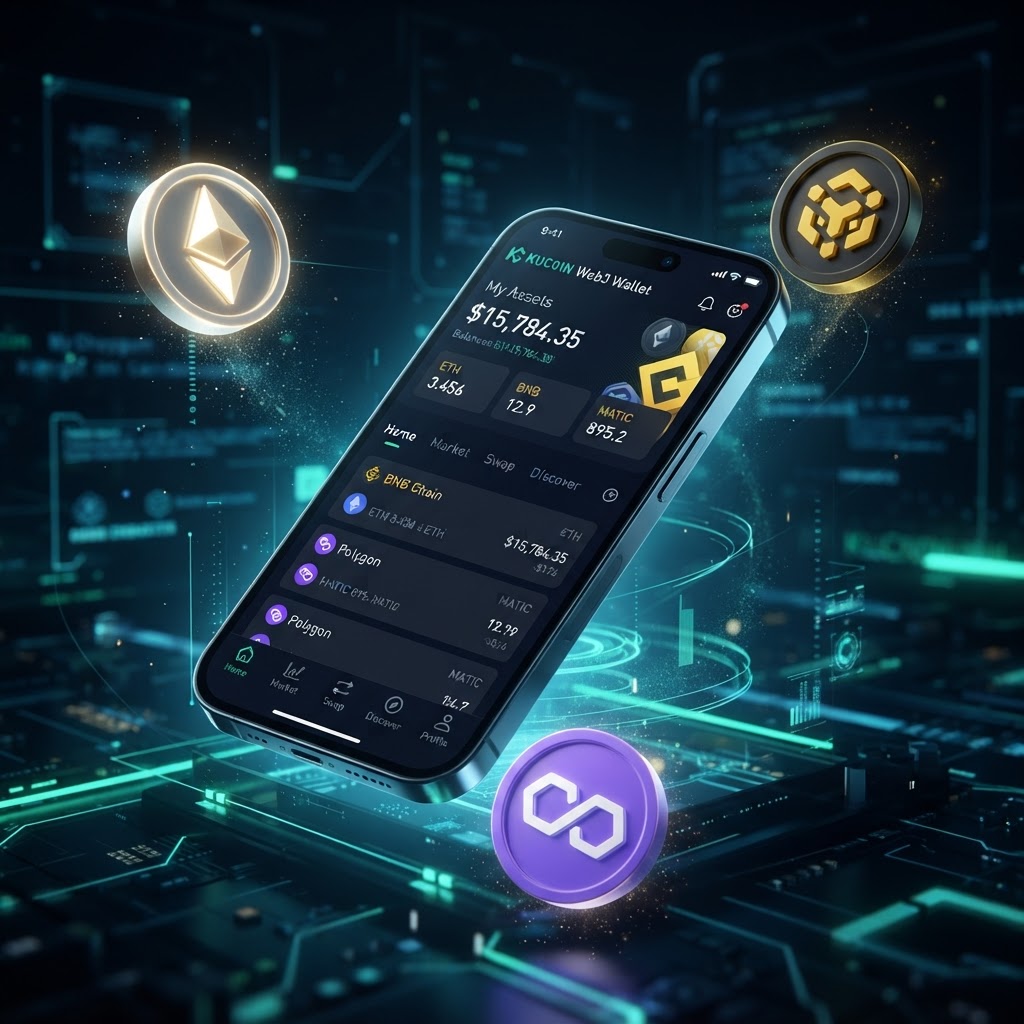
In the rapidly evolving landscape of digital assets, the boundary between centralized efficiency and decentralized sovereignty is becoming increasingly blurred. KuCoin, a global leader among cryptocurrency exchanges, has officially stepped into this frontier with the launch and continuous expansion of the KuCoin Web3 Wallet. This move signals a significant shift in how one of the world’s most popular trading platforms views the future of user engagement, moving beyond mere trading to become a comprehensive portal for the entire Web3 ecosystem.
The Evolution of the Gateway: From Exchange to Ecosystem
For years, KuCoin has been affectionately known as the ‘People’s Exchange,’ catering to a diverse global audience with a penchant for early-stage gems and a wide array of altcoins. However, as the industry matured, the limitations of centralized custodial models became apparent to a segment of users demanding more control. The KuCoin Web3 Wallet was born out of this necessity, designed to empower users with self-custody while maintaining the user-friendly experience that has defined the brand.
Johnny Lyu, CEO of KuCoin, recently remarked on the strategic importance of this transition. “Web3 is not just a buzzword; it represents a fundamental shift in how value and data are managed. By launching a dedicated Web3 wallet, we are giving our users the keys to the kingdom. We want to ensure that the transition from a centralized trading environment to the decentralized world of DeFi, NFTs, and DAOs is as frictionless as possible. Our goal is to provide a secure, easy-to-use bridge that doesn’t sacrifice the power of decentralization for the convenience of centralized services.”
Architectural Integrity and Multi-Chain Support
At its core, the KuCoin Web3 Wallet is a multi-chain aggregator. Unlike traditional wallets that may tether a user to a single ecosystem, KuCoin’s solution is built to be chain-agnostic. At launch, it provided support for major networks including Ethereum, BNB Chain, Polygon, and KCC (KuCoin Community Chain), with rapid expansions into Avalanche, Arbitrum, and Optimism shortly thereafter. This multi-chain approach is critical in a fragmented market where liquidity and innovation are spread across various Layer 1 and Layer 2 protocols.
The wallet utilizes a sophisticated backend that allows users to manage assets across these different networks through a single, unified interface. This eliminates the need for users to switch between multiple applications or maintain separate recovery phrases for different chains. The technical architecture emphasizes interoperability, ensuring that as new protocols gain traction, the wallet can integrate them with minimal downtime.
Security in a Trustless Environment
Security remains the primary concern for any participant in the decentralized space. The KuCoin Web3 Wallet addresses this through a robust framework that combines user-controlled private keys with advanced protective measures. As a self-custodial wallet, KuCoin does not have access to the user’s private keys or recovery phrases. This puts the user in total control of their funds, shielding them from the counterparty risks associated with centralized platforms.
To enhance this security, the wallet incorporates several layers of protection. “We have integrated top-tier security audits from leading firms like Hacken and PeckShield,” noted Sarah Jenkins, Lead Product Architect at KuCoin Web3. “But security is a process, not a destination. Our wallet features real-time risk monitoring for smart contracts. If a user attempts to interact with a decentralized application that has been flagged for malicious activity or contains known vulnerabilities, the wallet provides an immediate warning. We are blending the ‘don’t trust, verify’ ethos of crypto with proactive safety nets.”
Seamless Integration with the NFT Economy
The rise of Non-Fungible Tokens (NFTs) has transformed digital ownership, and the KuCoin Web3 Wallet is designed to be a premier gallery and marketplace for these assets. Beyond simple storage, the wallet offers a rich visualization layer, allowing users to view their digital collectibles across various chains in high resolution. It also features a built-in NFT aggregator, which pulls data from major marketplaces like OpenSea, Rarible, and KuCoin’s own Windvane platform.
This integration allows users to browse, buy, and sell NFTs directly from the wallet interface. By streamlining the process of discovering and trading digital art, KuCoin is lowering the barrier to entry for mainstream users who might find the current NFT landscape daunting. The wallet’s ability to handle multi-standard assets (ERC-721 and ERC-1155) ensures that users can manage everything from high-value 1-of-1 art pieces to mass-produced gaming assets with ease.
Empowering the DeFi User
Decentralized Finance (DeFi) is perhaps the most complex sector of the blockchain world. The KuCoin Web3 Wallet aims to simplify this by integrating a DApp browser that acts as a curated gateway to the most reliable decentralized applications. Users can connect to decentralized exchanges (DEXs) like Uniswap or PancakeSwap, lending protocols like Aave, and yield aggregators without ever leaving the wallet environment.
One of the standout features is the ‘One-Click Swap,’ which utilizes liquidity from both centralized and decentralized sources to ensure users get the best possible price with the lowest slippage. By abstracting the complexity of gas fees and route optimization, the wallet makes DeFi accessible to those who are accustomed to the simplicity of CEX trading. This functionality is particularly vital for the KCC ecosystem, where KuCoin is actively fostering a new generation of developers and projects.
The User Interface: A Focus on Accessibility
A recurring criticism of Web3 tools is their steep learning curve. The KuCoin Web3 Wallet counters this with a design philosophy centered on clarity. The dashboard provides a comprehensive view of a user’s total net worth across all supported chains, categorized by asset type. Real-time price feeds and historical performance charts are integrated directly into the asset view, providing the kind of analytical depth usually reserved for professional trading terminals.
The onboarding process has also been streamlined. New users can set up a wallet in seconds, with clear instructions on the importance of backing up their recovery phrase. For existing KuCoin exchange users, the transition is even smoother, with options to quickly transfer assets between their exchange account and their Web3 wallet, creating a synergistic loop between the two platforms.
The Broader Impact on the Blockchain Industry
The entry of a major player like KuCoin into the self-custodial wallet space has significant implications for the industry at large. It forces a higher standard of competition among established players like MetaMask and Trust Wallet, driving innovation in user experience and security. Furthermore, it validates the trend of ‘CeDeFi’—the hybridization of centralized and decentralized finance.
Industry analysts suggest that this move is part of a broader strategy to retain users as they explore more sophisticated blockchain interactions. By providing the tools for exploration, KuCoin ensures that its ecosystem remains relevant even as users migrate their activities on-chain. This ecosystem-first approach is likely to become the blueprint for other major exchanges looking to survive and thrive in the Web3 era.
The KuCoin Web3 Wallet is more than just a storage tool; it is a statement of intent. It represents a commitment to the core values of blockchain—transparency, security, and user empowerment. As the decentralized web continues to expand, tools that can bridge the gap between the familiar and the futuristic will be the most valuable assets in a user’s digital arsenal. KuCoin’s entry into this space ensures that the path to Web3 is not just open, but well-paved and secure for all.