The Sandersville Transformation: A New Era for CleanSpark
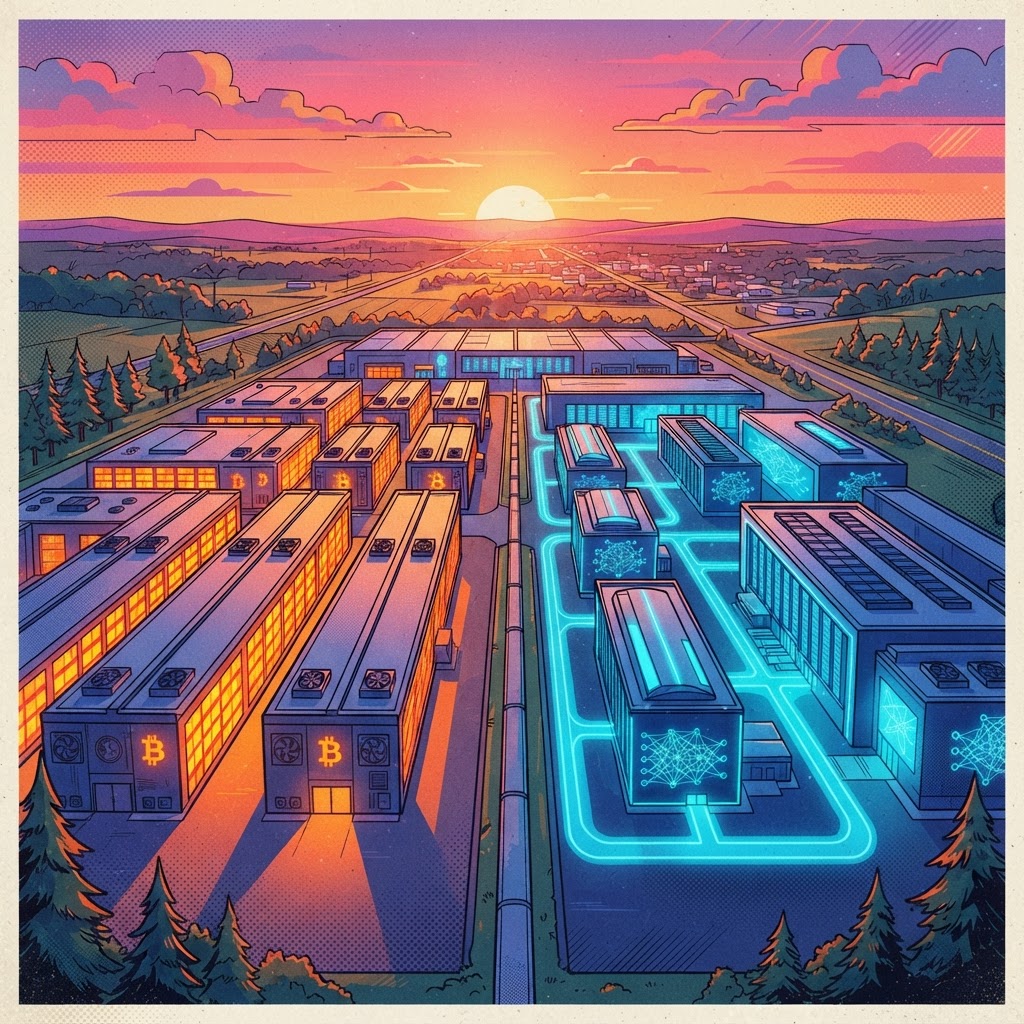
In a move that has sent shockwaves through both the cryptocurrency mining and high-performance computing (HPC) sectors, CleanSpark Inc. has officially finalized a massive 20-year lease agreement for its Sandersville, Georgia campus. The deal, valued at a staggering $6.6 billion, is with a confidential global technology firm, widely speculated to be a Tier-1 hyperscaler. This agreement marks one of the most significant pivots in the industry, as a premier Bitcoin mining facility begins its transition into a dedicated hub for artificial intelligence (AI) infrastructure. The Sandersville site, which has been a cornerstone of CleanSpark’s mining operations, represents a physical manifestation of the broader trend where energy-rich mining sites are being repurposed to meet the insatiable global demand for AI compute cycles.
The financial scale of the deal is unprecedented for a firm previously focused almost exclusively on the SHA-256 hashing algorithm. At $330 million in annual revenue over two decades, the lease provides CleanSpark with a stable, predictable, and non-dilutive cash flow that contrasts sharply with the volatility of Bitcoin mining rewards. As the industry grapples with the fallout of the 2024 halving, which reduced block rewards to 3.125 BTC, the allure of fixed-contract AI hosting has become undeniable. CleanSpark CEO Zach Bradford commented on the milestone: “This lease represents a paradigm shift for CleanSpark. We have always viewed ourselves as an energy company that happens to mine Bitcoin. By leveraging our infrastructure and energy-first approach, we are now positioned to meet the unprecedented demand for AI infrastructure while maintaining a diversified balance sheet that benefits our long-term shareholders.”
The Great Pivot: From ASICs to GPUs
The technical transition at the Sandersville campus involves a complex overhaul of the facility’s power density and cooling requirements. While Bitcoin mining typically utilizes Application-Specific Integrated Circuits (ASICs) like the Bitmain Antminer S21 or MicroBT Whatsminer M60 series, AI infrastructure relies heavily on General Purpose Graphics Processing Units (GPUs), specifically the NVIDIA H100 and upcoming Blackwell B200 architectures. The infrastructure requirements for these two workloads are vastly different. ASICs are designed for high-density, air-cooled or immersion-cooled environments where maximizing terahash per watt is the primary goal. In contrast, AI clusters require lower latency networking—often utilizing InfiniBand interconnects—and significantly more robust cooling solutions due to the higher heat production of high-end GPUs.
CleanSpark’s Sandersville site currently boasts a massive 200 megawatt (MW) capacity, with plans for further expansion. The shift toward AI means that instead of seeing rows of Bitmain Antminer S21 Pro units—which currently lead the market with an efficiency of 15 Joules per Terahash (J/TH)—the facility will soon house server racks containing hundreds of NVIDIA H100 SXM5 modules. Each of these GPU nodes can draw up to 700 Watts, requiring a specialized power delivery system that differs from the PDU configurations used for standard Bitcoin mining. Industry analyst Sarah Jenkins of BlockResearch noted, “The pivot we are seeing from CleanSpark and other public miners like Core Scientific is a rational response to the ‘AI arms race.’ When you compare the revenue per kilowatt-hour, AI hosting can generate upwards of $2.00, whereas Bitcoin mining, even with the most efficient S21 Pro hardware, often hovers between $0.05 and $0.15 depending on current hashprice levels.”
Mining Hardware Evolution and Hashrate Records
Despite the pivot to AI, the Bitcoin mining world is simultaneously experiencing a period of intense hardware innovation. The global hashrate has recently touched new all-time highs, oscillating between 650 EH/s and 700 EH/s. This surge is driven by the deployment of next-generation hardware. Bitmain recently began shipping the Antminer S21 XP, which pushes the boundaries of efficiency down to 13.5 J/TH. For miners remaining focused on Bitcoin, these efficiency gains are the only way to remain profitable as network difficulty continues to climb. The Sandersville deal effectively removes 200MW of potential hashrate from the Bitcoin network, which, if fully populated with S21 Pro units, would represent roughly 8 to 10 Exahashes per second (EH/s). This removal of capacity provides a slight relief to the remaining miners on the network, as it slows the upward trajectory of network difficulty.
However, the mining community is also closely watching the development of the MicroBT Whatsminer M66S, a liquid-cooled ASIC that claims to offer superior heat dissipation and overclocking potential. The convergence of AI and Bitcoin mining is also seen in cooling technology. Many of the immersion cooling techniques developed by Bitcoin miners—where hardware is submerged in a non-conductive dielectric fluid—are now being adapted for AI data centers to manage the extreme thermal loads of GPU clusters. CleanSpark has been a pioneer in immersion cooling, and their expertise in this area likely played a critical role in securing the $6.6 billion lease. The confidential tech firm is undoubtedly interested in the operational efficiency that CleanSpark’s engineering team has perfected over years of high-density Bitcoin mining.
Energy Efficiency and Grid Stability in Georgia
The Sandersville campus is strategically located to take advantage of Georgia’s robust energy grid and favorable regulatory environment. CleanSpark has maintained a strong relationship with Georgia Power, utilizing a mix of nuclear, hydroelectric, and solar energy to power its operations. The 20-year lease ensures that the facility will continue to be a major consumer of power, but the shift to AI may change the facility’s role in grid stabilization. Bitcoin miners are known for their ability to provide “load balancing” or “demand response” services, where they shut down operations during times of peak grid stress to free up electricity for residential use. AI workloads, however, are typically less flexible. AI training models require constant, uninterrupted power for weeks or months at a time.
To accommodate this, CleanSpark has reportedly worked on upgrading the Sandersville substation to 230kV, ensuring redundant power feeds to satisfy the 99.99% uptime requirements of a global tech giant. This infrastructure investment not only benefits the AI tenant but also increases the long-term value of the physical land and buildings. The pivot to AI is not merely a change in hardware; it is a change in the operational philosophy of the company. While Bitcoin mining is a race for the lowest energy cost and highest hashrate, AI hosting is a race for reliability, low-latency connectivity, and tier-level data center certification. The $6.6 billion valuation reflects the high cost of entry into the Tier-3 data center market and the scarcity of shovel-ready sites with hundreds of megawatts of power already secured.
The Broader Implications for Public Miners
CleanSpark’s massive deal follows similar moves by other industry leaders. Core Scientific recently announced a multi-billion dollar deal with CoreWeave to host AI compute, and companies like Terawulf are exploring HPC opportunities at their Lake Mariner facility. This trend suggests a bifurcation of the mining industry. On one side are the “pure-play” miners who will continue to chase Bitcoin rewards by deploying the latest 12 J/TH to 15 J/TH ASICs in low-cost jurisdictions. On the other side are the “infrastructure-first” companies like CleanSpark that are morphing into diversified technology REITs (Real Estate Investment Trusts) or specialized data center operators.
For the mining community, this shift raises questions about the long-term security of the Bitcoin network. As more public miners move their power capacity to AI, the decentralization of the hashrate could shift back toward private entities and regions with extremely low energy costs, such as Ethiopia or parts of Southeast Asia. However, the technological cross-pollination between AI and mining hardware remains a net positive. The demand for more efficient chips in the AI space is driving innovations in 3nm and 2nm semiconductor manufacturing, which will eventually trickle down to the next generation of Bitcoin ASICs. The S21 Pro and the M63S are already beneficiaries of these advancements, offering performance that was thought impossible just three years ago. As CleanSpark begins the 20-year journey of the Sandersville lease, the industry will be watching closely to see how the company balances its remaining Bitcoin mining fleet with its new role as a cornerstone of the global AI infrastructure.