The Renaissance of Development in the City of Seven Hills
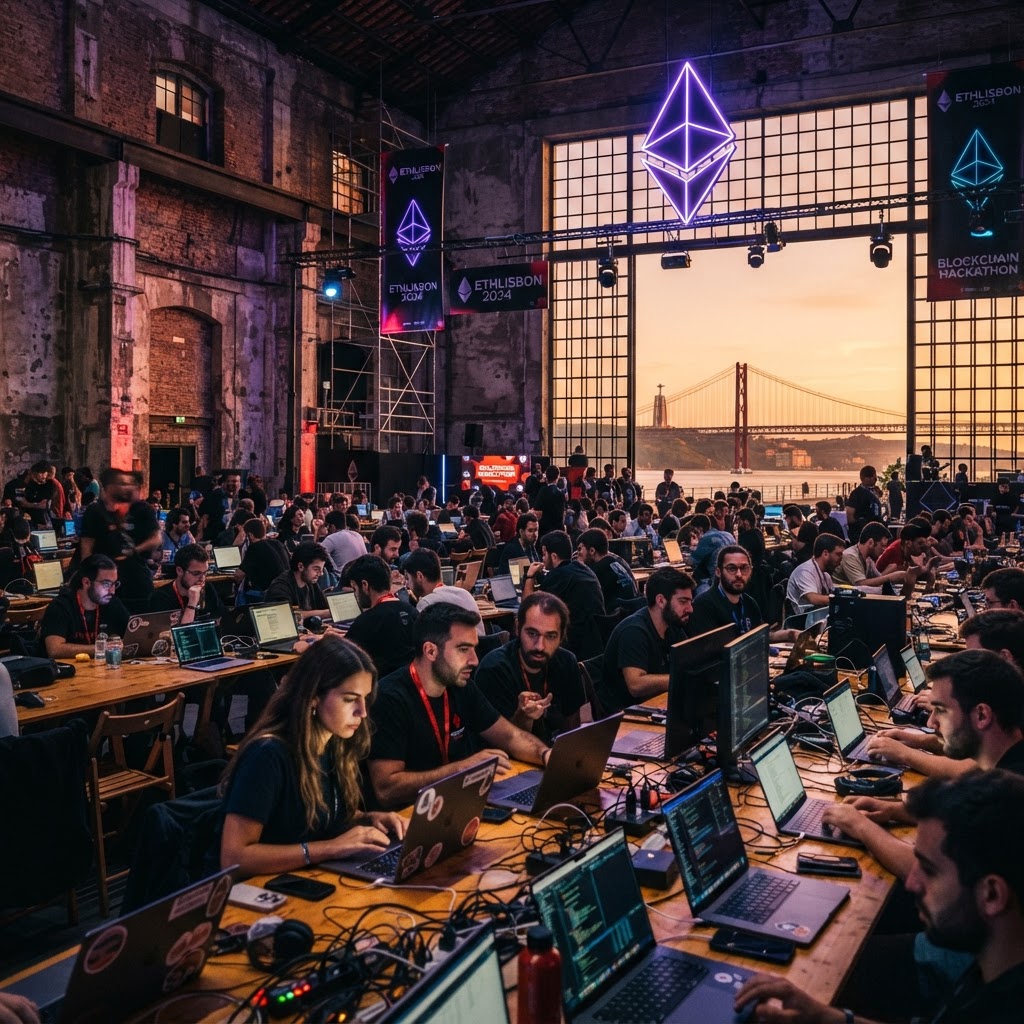
The cobblestone streets of Lisbon, historically the launching point for explorers of the New World, have found a new identity as the harbor for the digital pioneers of the Web3 era. ETHGlobal Lisbon, the latest installment in the prestigious series of global Ethereum hackathons, has officially taken over the city, drawing a diverse crowd of developers, designers, and visionaries from every corner of the globe. As the sun sets over the Tagus River, the LX Factory—a refurbished industrial hub that serves as the event’s heart—pulses with a different kind of energy: the rhythmic tapping of keys and the intense focus of three thousand builders competing for glory, grants, and the chance to shape the future of the decentralized web. The atmosphere is one of focused chaos, where the boundaries between sleep and code blur into a singular mission of innovation.
Portugal’s capital has rapidly ascended the ranks of global crypto hubs, thanks in part to its welcoming regulatory environment and the influx of talent seeking a high quality of life. ETHGlobal Lisbon represents the culmination of this growth, acting as a magnet for the Ethereum community. This year’s event is particularly significant, occurring at a crossroads for the network as it transitions from theoretical scaling solutions to practical, mass-market applications. The hackers present are not just building toys; they are engineering the infrastructure for a global, permissionless economy.
A 36-Hour Sprint into the Future
The hackathon format is legendary for its intensity, and Lisbon is no exception. Over the course of 36 hours, teams are tasked with conceiving, building, and demoing a functional decentralized application (dApp) or infrastructure tool. The stakes are high, with hundreds of thousands of dollars in prizes provided by sponsors like Uniswap, Safe, Worldcoin, and Metamask. But for most, the true reward is the validation of their peers and the possibility of their project becoming the next big protocol in the space. Elena Rodriguez, a lead developer at a prominent DeFi protocol and a veteran hackathon mentor, noted the shift in quality: The caliber of projects we are seeing in Lisbon is staggering. We have moved past simple clones of existing protocols. Now, builders are tackling complex problems like cross-chain intent execution and privacy-preserving identity systems with remarkable sophistication.
The venue is a microcosm of the global Ethereum community. In one corner, a team from Seoul debates the merits of different Zero-Knowledge Proof (ZKP) libraries. In another, a solo developer from Berlin works feverishly on a new governance module for DAOs. The shared language is Solidity, Cairo, and Rust, and the common goal is to push the limits of what is possible on-chain. Coffee and energy drinks are the primary currency of exchange, alongside the occasional Portuguese custard tart, providing the necessary fuel for the final push toward the Sunday afternoon submission deadline.
The Core Themes: Scalability, Account Abstraction, and Beyond
Three major technical themes have dominated the discussions and project submissions at ETHGlobal Lisbon: Layer 2 (L2) ecosystems, Account Abstraction (AA), and the integration of Artificial Intelligence with blockchain. With the recent implementation of EIP-4844 and the resulting drop in L2 transaction costs, developers are finally able to build high-throughput applications that were previously economically unfeasible. We are seeing a massive surge in consumer-facing apps, said Marco Silva, a local Lisbon entrepreneur and blockchain advocate. For years we talked about UX being the hurdle. With Account Abstraction—specifically ERC-4337—we are seeing projects that allow users to sign up with just an email, hiding the complexity of gas fees and private keys entirely. This is the bridge to the next billion users.
Privacy has also taken center stage. Several teams are leveraging ZK-SNARKs to create private voting mechanisms and confidential transaction layers that still comply with regulatory standards. The focus is no longer just on hiding data, but on selective disclosure—allowing users to prove they meet certain criteria without revealing their entire financial history. This nuance is critical as the industry prepares for broader institutional adoption and the implementation of frameworks like Europe’s MiCA regulation.
The Rise of Autonomous Worlds and On-Chain Gaming
Beyond finance, the concept of ‘Autonomous Worlds’ has captured the imagination of many Lisbon participants. These are fully on-chain gaming environments where every rule, asset, and player interaction is governed by smart contracts, ensuring a level of permanence and interoperability that traditional gaming cannot match. Projects built using the MUD or Dojo frameworks are popping up across the hackathon floor, featuring complex ecosystems where players can truly own their digital legacies. The transition from ‘Play-to-Earn’ to ‘Play-to-Own’ or simply ‘Fully On-Chain’ is a significant narrative shift, moving away from inflationary tokenomics toward genuine digital sovereignty.
AI Meets the Blockchain
Perhaps the most experimental projects involve the intersection of AI and blockchain. Developers are utilizing decentralized compute networks to train models and deploying ‘AI Agents’—autonomous smart contracts that can analyze market data and execute trades or governance votes without human intervention. These agents act as the connective tissue between the vast data processing power of modern AI and the trustless execution of the Ethereum Virtual Machine. While still in their infancy, these projects point toward a future where the decentralized web is populated by both humans and intelligent automated entities, all interacting on a level playing field.
The Social Fabric and the Side Event Summer
While the hackathon is the main event, the ‘side event’ culture in Lisbon has reached a fever pitch. Throughout the week, the city has hosted dozens of satellite conferences, meetups, and parties. From rooftop gatherings overlooking the 25 de Abril Bridge to deep-dive technical workshops in the Chiado district, the networking opportunities are endless. These events serve as the social glue of the ecosystem, allowing developers to meet the founders of the tools they use every day. It is here that the next major partnerships are forged and where the philosophical debates about the future of decentralization take place over glasses of Vinho Verde.
The local Portuguese community has embraced this influx with open arms. Lisbon’s ‘Crypto Valley’ is no longer a localized phenomenon but a global destination. The government’s proactive stance on innovation, combined with the presence of major hubs like the Unicorn Factory, has created a fertile ground for startups to put down roots after the hackathon ends. Many teams that formed during previous ETHGlobal events in Lisbon have stayed, contributing to a permanent tech ecosystem that transcends the duration of a single weekend. The city’s ability to blend its historical heritage with cutting-edge technology makes it a unique backdrop for the Ethereum community’s collective effort to rebuild the internet’s infrastructure.
A Legacy of Innovation
As the final presentations commence on the main stage, the energy in the LX Factory is electric. The finalists represent the diversity of the ecosystem, ranging from infrastructure optimizations to social media protocols and revolutionary DeFi primitives. The judges, including prominent figures from the Ethereum Foundation and top-tier venture capital firms, face the difficult task of selecting winners from a pool of high-quality submissions. However, the prevailing sentiment is that every participant contributes to the network effect of Ethereum. Every line of code written during these 36 hours adds to the collective knowledge base of the community.
The impact of ETHGlobal Lisbon will be felt long after the hackers have packed their bags and the banners have been taken down. The projects started here will iterate, pivot, and eventually find their way to mainnet, providing the tools and services for a more transparent and equitable digital future. The event stands as a testament to the resilience and creativity of the developer community, proving that even in a fluctuating market, the drive to build remains stronger than ever. Lisbon has once again shown that it is not just a place to visit, but a place to create.