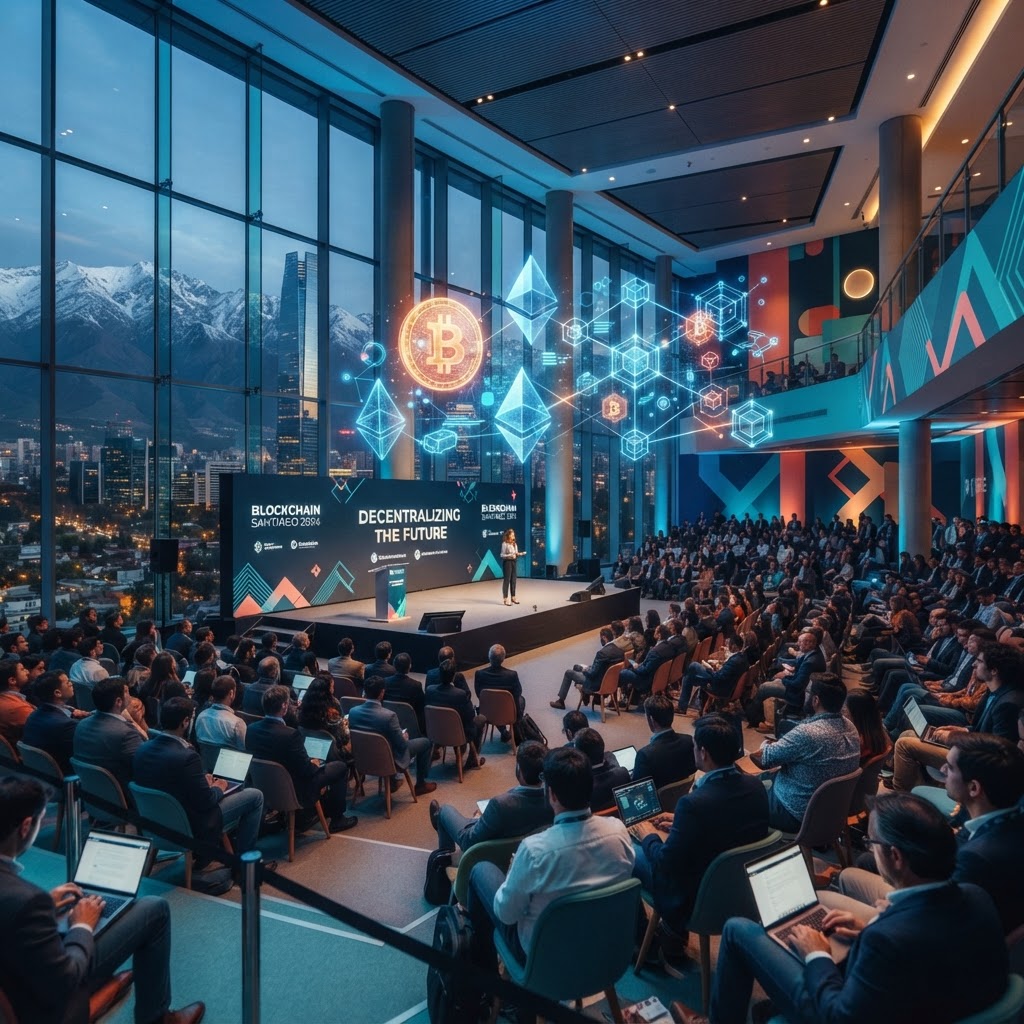
As the winter sun rises over the snow-capped peaks of the Andes, the city of Santiago, Chile, is preparing to host what is being hailed as the most significant crypto event in the Southern Hemisphere: Blockchain Summit Latam (BSL) 2026. Scheduled for August 5–7 at the sprawling Espacio Riesco convention center, the 10th anniversary of this premier gathering signals a new era for the region. No longer just a playground for retail speculation or a hedge against inflation, Latin America has matured into a formidable architect of global blockchain utility.
A Decade of Decentralization
Since its inception, Blockchain Summit Latam has tracked the tumultuous and triumphant journey of the industry. In 2026, the landscape looks remarkably different than it did during the ‘crypto winters’ of the past. Bitcoin has solidified its place as a cornerstone of national treasury reserves, and the integration of Ethereum’s Layer-2 scaling solutions has made micro-transactions as seamless as a local debit card swipe. Cristobal Pereira, the visionary organizer behind BSL, notes that the 2026 edition is about ‘The Great Convergence.’ According to Pereira, ‘We are witnessing the collision of artificial intelligence, real-world asset tokenization, and sovereign digital identity. Santiago is the perfect stage for this because the Chilean Fintech Law of 2023 has now blossomed into a fully realized regulatory ecosystem that the world is watching.’
Institutional Adoption and the RWA Revolution
The headline theme for 2026 is the tokenization of Real-World Assets (RWA). Industry experts estimate that the market for tokenized commodities, real estate, and government bonds has surpassed $5 trillion globally, with Latin America leading the charge in agricultural and mineral-backed assets. A dedicated track at the summit will focus on ‘The Tokenization of the Andes,’ exploring how Chile’s massive lithium reserves are being tracked on-chain to meet global ESG (Environmental, Social, and Governance) standards. Dr. Elena Torres, a lead researcher at the Santiago Blockchain Institute, explains the significance: ‘By placing lithium supply chains on a transparent ledger, we are providing the global electric vehicle market with verifiable data on the carbon footprint and ethical sourcing of every battery produced in Chile. This isn’t just finance; it’s climate tech built on blockchain.’
The AI-Blockchain Synergy: Beyond the Hype
While 2024 and 2025 were characterized by the initial excitement surrounding Generative AI, 2026 is the year of functional synergy. The summit will feature several keynotes on ‘DePIN’ (Decentralized Physical Infrastructure Networks), showcasing how decentralized GPU clusters are powering the next generation of LLMs across the continent. ‘In 2026, we don’t just talk about AI and blockchain separately,’ says Marcus Viana, a CTO at a leading Brazilian DeFi protocol. ‘We talk about AI agents that hold their own crypto wallets, execute smart contracts, and participate in decentralized autonomous organizations (DAOs). At BSL 2026, we will showcase how Chilean startups are using AI to optimize yields in decentralized liquidity pools, creating a new form of automated wealth management for the unbanked.’
Regulation: From Sandboxes to Global Standards
One of the most anticipated sessions is the Ministerial Roundtable, featuring finance ministers and central bank governors from Chile, Brazil, Argentina, and Colombia. The discussion will pivot around the ‘Santiago Declaration,’ a proposed framework for cross-border interoperability between Central Bank Digital Currencies (CBDCs). With Brazil’s DREX and Chile’s Digital Peso now in advanced stages of implementation, the focus has shifted to how these systems can interact to bypass the friction of the legacy SWIFT network. The regulatory clarity provided by these nations has attracted a wave of Silicon Valley and European venture capital, eager to tap into a market where over 60% of the population is ‘digitally native’ yet ‘financially underserved.’
Green Mining and the Atacama Initiative
Chile’s unique geography is also playing a central role in the mining discussions. The Atacama Desert, home to the highest solar radiation in the world, has become a hub for ‘Green Bitcoin Mining.’ A special panel titled ‘The Sun, the Wind, and the Hashrate’ will detail how surplus renewable energy is being channeled into massive modular mining data centers. This initiative has not only stabilized the local power grid but has also provided a blueprint for how energy-intensive industries can coexist with aggressive net-zero targets. Attendees will have the opportunity to participate in a virtual reality tour of these facilities, which are now being used to heat local greenhouses in the high-altitude desert regions, creating a circular economy fueled by the blockchain.
Social Impact and Financial Inclusion
Despite the high-tech focus, the summit remains grounded in its original mission: financial inclusion. The ‘Social Impact Stage’ will highlight stories from across the continent—from coffee farmers in Colombia using ZK-proofs to prove fair-trade compliance without compromising their privacy, to Argentine entrepreneurs using stablecoins to navigate the complexities of international trade. The ‘Stablecoin Alley’ exhibition will showcase the latest advancements in inflation-resistant assets and the rise of yield-bearing accounts that offer everyday citizens access to global capital markets. As Sofia Mendez, a community leader from a local tech hub, puts it, ‘Blockchain in 2026 isn’t a luxury; it’s a lifeline. We are building systems that don’t care who your father was or what your credit score is. We are building systems that only care about the validity of the math.’
The Developer Experience and the Move Language
For the technical crowd, BSL 2026 offers a series of intensive workshops focused on the ‘Move’ programming language and the evolution of Rust-based chains. As the industry moves away from the vulnerabilities of legacy smart contract languages, the ‘Security First’ movement has taken hold. Developers from around the world will compete in a 48-hour hackathon sponsored by major foundations, aiming to solve the ‘Interoperability Trilemma.’ The goal is to create bridges that are not just fast, but inherently secure against the quantum-computing threats that have begun to emerge on the horizon. The hackathon winners will be announced during the gala dinner at the base of San Cristobal Hill, overlooking the shimmering lights of a city that has truly embraced the digital future.
As the countdown to August 5 continues, the global crypto community looks to Santiago with high expectations. The summit is not merely a conference; it is a manifestation of a decade of hard-earned progress. In the halls of Espacio Riesco, the next ten years of the decentralized internet will be drafted, debated, and delivered. With a lineup that includes some of the most influential figures in tech, finance, and policy, Blockchain Summit Latam 2026 is poised to be the definitive moment when Latin America officially claims its seat at the head of the global blockchain table.