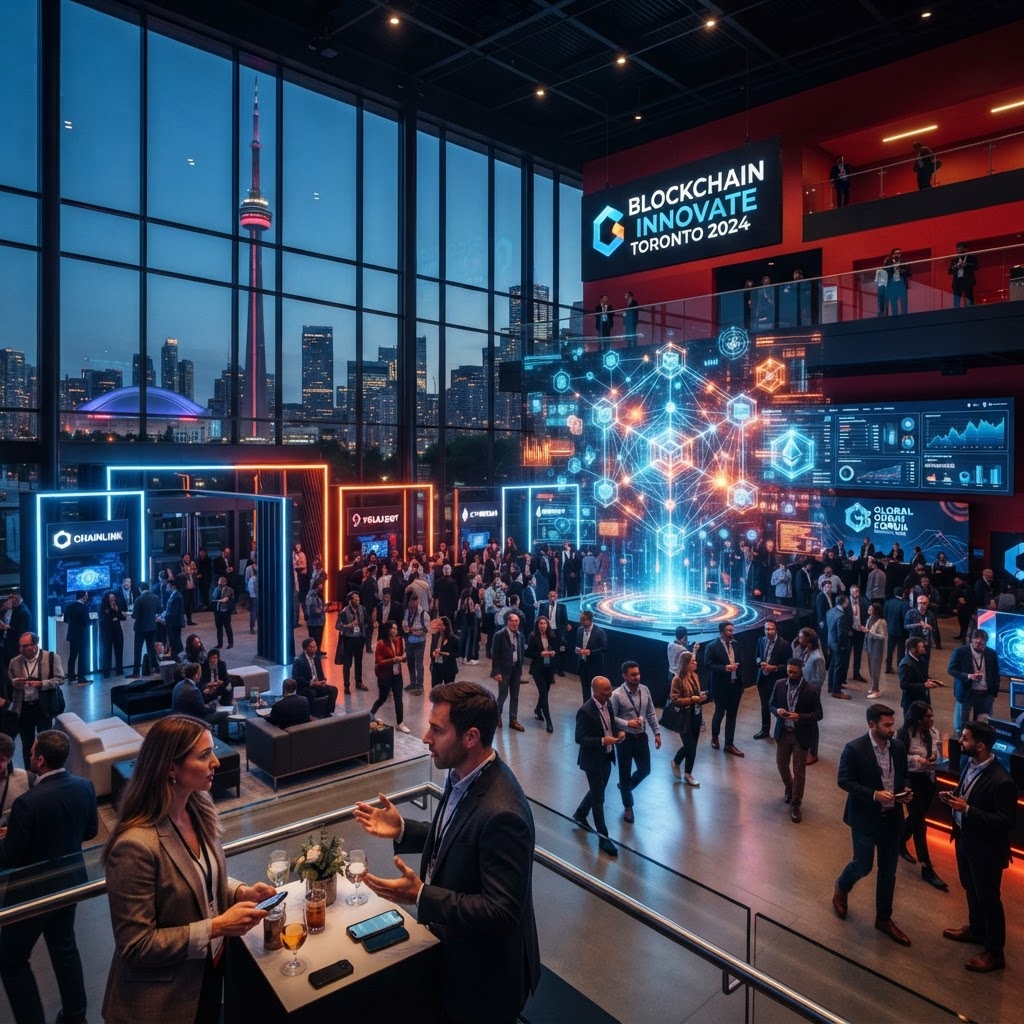
As the morning sun reflects off the glass towers of Bay Street, the global blockchain community has descended upon the Metro Toronto Convention Centre for the highly anticipated Web3 Toronto 2026. This year’s conference, now in its fifth iteration, represents a significant shift in the industry’s trajectory. No longer are the halls filled with the speculative fervor of early-stage bull markets; instead, they are occupied by the steady, focused energy of builders, institutional giants, and policymakers who are actively integrating decentralized ledger technology into the fabric of the global economy.
The Hub of Northern Innovation
Toronto has long been a quiet powerhouse in the cryptographic world—the birthplace of Ethereum and home to some of the world’s most stringent yet clear financial regulations. In 2026, the city is asserting its dominance as the premier North American hub for Web3. The opening keynote, delivered by Sarah Chen, Chief Innovation Officer at Nexus Protocol, set the tone for the three-day event. “We are moving past the ‘experimental’ phase of blockchain,” Chen told a packed auditorium. “In 2026, the question is no longer whether blockchain works, but how we can scale it to serve billions of users without compromising the core tenets of decentralization.”
The scale of the event is staggering. With over 15,000 attendees, 400 speakers, and 250 exhibitors, Web3 Toronto 2026 has officially outpaced its previous records. The floor is divided into distinct zones: the Institutional DeFi Pavilion, the DeAI (Decentralized AI) Corridor, and the Cultural NFT & Metaverse Lounge. Each area reflects a core pillar of the current landscape, demonstrating how much the industry has matured since the volatile days of the early 2020s.
The Institutional Embrace of RWA Tokenization
One of the most significant themes of the first day has been the Real-World Asset (RWA) tokenization boom. Major Canadian banks, including representatives from RBC and TD, were seen participating in panels alongside DeFi protocol founders. The consensus is clear: the friction of traditional finance is being replaced by the efficiency of on-chain settlement. Marcus Thompson, a senior strategist at Global Ledger Group, highlighted that the tokenization of Canadian real estate and government bonds has moved from pilot programs to live, multi-billion dollar markets. “The liquidity we’ve unlocked by putting private equity and debt on-chain is transformative,” Thompson noted during a breakout session. “Toronto is at the center of this because of our robust legal framework that allows for digital ownership to be recognized in a court of law.”
The Institutional DeFi Pavilion showcased several ‘permissioned’ liquidity pools that allow regulated entities to interact with the transparency of blockchain while adhering to AML and KYC requirements. This ‘middle ground’ approach is a cornerstone of the 2026 landscape, proving that the radical transparency of the blockchain can coexist with the privacy needs of large-scale financial players.
Decentralized AI: The New Frontier
If 2024 was the year of the LLM, 2026 is the year of DeAI. The DeAI Corridor at the conference is buzzing with developers who are using blockchain to decentralize the training and ownership of artificial intelligence models. The goal is to prevent the monopolization of intelligence by a handful of tech giants. Projects like ‘AetherNodes’ and ‘ComputeDAO’ demonstrated how distributed GPU networks are now outperforming centralized clouds in cost-efficiency and censorship resistance.
“AI is the engine, but blockchain is the guardrails,” said Dr. Elena Vance, a lead researcher in neural cryptography. “At Web3 Toronto, we are seeing the first truly autonomous agents that can manage their own wallets, execute smart contracts, and procure their own computing power. This is the birth of the machine economy, and it’s happening right here on the Ethereum and Solana L2s.” The integration of Zero-Knowledge Proofs (ZKP) in AI training was another hot topic, with developers showcasing how data privacy can be maintained even when training large-scale public models.
The Bitcoin Renaissance and Layer 2 Scaling
Bitcoin’s evolution remains a central talking point. Two years after the 2024 halving, the Bitcoin network has transformed from a passive ‘digital gold’ into a vibrant ecosystem of decentralized applications. The ‘Orange Room’ at the conference was dedicated entirely to Bitcoin Layer 2 solutions. Experts discussed how the implementation of BitVM and the proliferation of Ordinals have paved the way for sophisticated smart contracts on top of the world’s most secure network.
“The narrative has shifted,” explained Jameson Lee, founder of a Bitcoin-native DeFi platform. “We aren’t just holding Bitcoin anymore; we are putting it to work. The capital efficiency of BTC as collateral in the 2026 ecosystem is unparalleled. We are seeing thousands of transactions per second on Bitcoin L2s, and the security budget for the mainnet is healthier than ever thanks to these new utility layers.”
Regulation as a Competitive Advantage
While regulation was once viewed as a threat to the crypto industry, the mood at Web3 Toronto 2026 is one of collaboration. Canadian regulators from the OSC (Ontario Securities Commission) held several ‘office hours’ sessions, providing direct feedback to startup founders. The clear message was that Canada’s ‘Balanced Approach’—which involves strict consumer protection but provides clear pathways for token issuance—is attracting talent from jurisdictions that remain bogged down in legal uncertainty.
A special panel on ‘Global Standards’ featured speakers from the EU, Singapore, and Canada, discussing the harmonization of stablecoin regulations. The discussion highlighted the emergence of the CAD-backed stablecoin as a dominant regional medium of exchange, used extensively in cross-border trade between Canada and its major trading partners. The stability provided by these regulated fiat-pegged assets has been a major driver in the retail adoption of Web3 payments across Toronto’s merchant network.
Identity and the Social Graph
In the Cultural Lounge, the focus shifted to Decentralized Identity (DID) and the evolution of social media. The ‘DeSoc’ (Decentralized Social) movement has gained significant traction in 2026, as users flee the algorithmic manipulation of legacy platforms. At Web3 Toronto, several new protocols launched their mainnets, allowing users to own their social graph and move their followers and content between different applications seamlessly. Use cases for digital identity reached beyond just social media; the City of Toronto itself is exploring the use of Soulbound Tokens (SBTs) for municipal voting and public transit subsidies, showcasing a practical application of the ‘Web3 City’ concept.
Sustainable Infrastructure and the Green Mining Initiative
Given Canada’s vast hydroelectric and nuclear power resources, sustainability was an inevitable topic of discussion. The ‘Green Mining Initiative’ showcased several Ontario-based projects that utilize stranded energy to secure the network while heating greenhouses and residential complexes. This circular economy approach has turned blockchain infrastructure into a net-positive for the local environment. Industry leaders presented data showing that as of 2026, over 75% of the global hash rate is powered by renewable sources, with Canadian miners leading the charge in transparency and carbon reporting.
Networking events across the city—from the Distillery District to the Harbourfront—allowed for the kind of serendipitous connections that define the Web3 spirit. At the ‘Founders & Funders’ gala, it was noted that venture capital flows into the Canadian blockchain sector have reached an all-time high, with a specific focus on ‘infrastructure-as-a-service’ and ‘privacy-preserving tech.’ The diversity of the crowd—spanning every continent and age group—served as a testament to the global nature of the movement and Toronto’s role as its welcoming host.
Throughout the exhibition hall, the tangible progress of the last decade was on full display. From hardware wallets that look like high-end jewelry to dApps with interfaces so seamless that users don’t even realize they are interacting with a blockchain, the ‘invisible’ stage of technology adoption is clearly here. The conversations didn’t revolve around ‘when’ the technology would be ready, but rather how quickly the existing social and financial systems can adapt to the new reality being built by those in attendance.