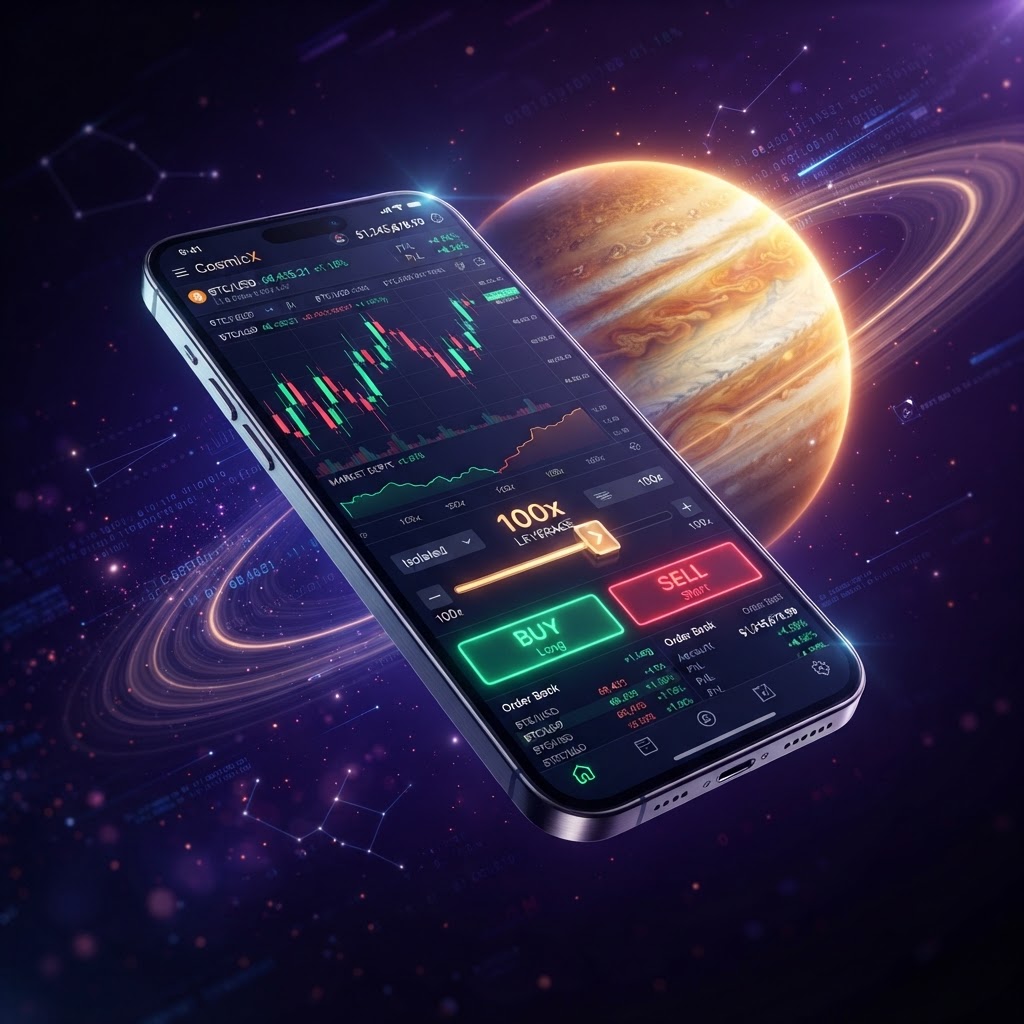
In a move that signals a major shift toward mobile-first decentralized finance (DeFi), Jupiter Exchange, the premier liquidity aggregator and perpetuals platform on the Solana blockchain, has officially announced the launch of its Mobile Perp-Trading Interface Beta. This development is set to redefine how retail and professional traders interact with high-leverage instruments on the go, bridging the longstanding gap between the convenience of centralized exchange (CEX) apps and the transparency of decentralized protocols.
The Evolution of Jupiter: From Aggregator to Powerhouse
Since its inception, Jupiter has been at the forefront of the Solana ecosystem, initially gaining fame as the most efficient swap aggregator in the industry. By routing trades across various liquidity pools, it ensured users always received the best possible price. However, the team behind Jupiter has never been content with staying in a single lane. The introduction of perpetual trading (perps) was a turning point, allowing users to trade with leverage without the need for a central intermediary.
The launch of the mobile beta is the next logical step in Jupiter’s ‘LFG’ philosophy. While the desktop experience has been lauded for its speed and sleek design, the crypto market operates 24/7, and traders often find themselves away from their workstations during critical market movements. ‘Our goal has always been to make DeFi as accessible and powerful as any centralized alternative,’ said a Jupiter core contributor during a recent community town hall. ‘Mobile perps represent the ultimate test of that vision. We aren’t just making a website that fits on a phone screen; we are building a native-feeling experience that handles the rigors of high-leverage trading.’
Technical Precision on a Small Screen
One of the primary challenges of mobile DeFi has always been the user interface. Trading perpetuals requires a significant amount of data visibility: price charts, order books, funding rates, open positions, and liquidation prices all need to be accessible at a glance. Jupiter’s mobile beta addresses this by employing a modular UI design that prioritizes clarity without sacrificing depth.
The interface includes custom-designed trading modules that allow users to toggle between views seamlessly. For instance, the ‘Quick-Trade’ feature enables users to adjust leverage and execute orders with minimal taps, a necessity for those reacting to sudden volatility. The integration of TradingView charts, optimized for vertical displays, ensures that technical analysts can still perform basic charting and indicator checks before entering a position.
The Power of the JLP Pool
At the heart of Jupiter’s perpetual trading engine is the JLP (Jupiter Liquidity Provider) pool. Unlike traditional order book models used by platforms like dYdX or Hyperliquid, Jupiter utilizes a multi-asset liquidity pool that acts as the counterparty to all trades. This model is particularly well-suited for mobile trading because it guarantees instant execution and minimal slippage, even for large orders.
For mobile users, this means that the latency often associated with mobile networks is mitigated by the certainty of the JLP engine. When a trader hits ‘Long’ or ‘Short,’ the trade is processed against the pool liquidity on the Solana blockchain, which boasts sub-second block times. The mobile beta takes full advantage of this speed, offering a responsive experience that feels more like a local application than a web-based dApp.
Competitive Landscape and Market Positioning
The timing of this beta launch is crucial. The DeFi landscape is currently seeing a resurgence, with Solana leading the charge in terms of active addresses and transaction volume. By launching a mobile-optimized perp interface, Jupiter is directly challenging the dominance of CEX giants like Binance and Bybit, which have long held the advantage in mobile accessibility.
In the decentralized space, the competition is also heating up. Platforms like GMX on Arbitrum and Drift Protocol on Solana are also vying for the mobile market. However, Jupiter’s massive existing user base—born from its swap aggregator roots—gives it a significant head start. The $JUP token, which serves as the governance and incentive backbone of the ecosystem, has also seen increased utility and interest as the platform expands its suite of products.
Security and Risk Management in the Palm of Your Hand
Security remains a paramount concern for any mobile financial application. The Jupiter mobile beta incorporates several layers of protection to ensure user funds and positions are secure. This includes integration with leading Solana mobile wallets like Phantom and Solflare, which offer biometric authentication (FaceID or fingerprint) for signing transactions. This ensures that even if a phone is lost or stolen, the underlying private keys remain protected within the secure enclave of the device.
Furthermore, the mobile interface includes robust risk management tools. Traders can set take-profit (TP) and stop-loss (SL) orders directly from the mobile app, with clear visual indicators of where their liquidation price sits relative to their entry. In the volatile world of crypto, these features are not just luxuries; they are essential tools for capital preservation. The beta also features real-time notifications for price alerts and position updates, keeping traders informed of their exposure at all times.
The Broader Impact on the Solana Ecosystem
Jupiter’s mobile push is also a massive win for the broader Solana ecosystem, specifically for the Solana Mobile initiative. With the success of the Saga phone and the upcoming ‘Chapter 2’ device, there is a growing demand for ‘dApps that don’t suck on mobile.’ Jupiter is leading this charge, proving that the high performance of the Solana network can be harnessed to deliver a user experience that rivals Web2 applications.
The integration of the mobile perp interface with the Solana dApp Store will likely serve as a blueprint for other developers. By prioritizing mobile-native features like push notifications for liquidations and simplified wallet interactions, Jupiter is lowering the barrier to entry for the next wave of DeFi users who may not even own a desktop computer.
Community Feedback and the Path to Public Release
As with all beta programs, Jupiter is relying heavily on its community of ‘Jupitarians’ to battle-test the interface. The beta is currently being rolled out to a select group of active traders and JUP stakers, with plans to expand access as bugs are squashed and the UI is refined. The team has set up dedicated feedback channels where users can report issues related to screen scaling, transaction signing latency, and general usability.
Early feedback has been overwhelmingly positive. One beta tester, known in the community as ‘SolTradersDaily,’ noted, ‘The responsiveness is unlike anything I’ve seen in DeFi. Usually, when you trade perps on a phone, you feel like you’re fighting the browser. With Jupiter, it feels like the interface is actually working with you. The JLP pool depth makes me feel confident even when I’m trading 50x leverage on a 5G connection.’
Future Roadmap: Beyond the Beta
Looking ahead, the Jupiter team has hinted at several features that will eventually make their way into the mobile experience. These include social trading features, where users can share their positions or follow the trades of top-performing accounts, and ‘One-Click Trading’ (1CT) via session keys, which would remove the need to sign every single transaction manually, making the experience even more fluid.
There is also talk of deeper integration with the Jupiter LFG Launchpad, allowing users to participate in token launches and manage their allocations entirely from their mobile devices. The long-term vision is clear: a unified, mobile-first financial hub that replaces the need for centralized banks and exchanges entirely. As the beta progresses, the team will continue to optimize the backend to handle the expected influx of thousands of simultaneous mobile users, ensuring that the network remains stable and the price feeds stay accurate.
The mobile perpetual trading beta is not just a feature update; it is a statement of intent. It proves that DeFi is no longer a niche playground for those with multi-monitor setups and high-end PCs. It is becoming a global, accessible, and highly efficient market that fits in your pocket, powered by the most performant blockchain in existence today. The eyes of the crypto world are now firmly on Jupiter as it transitions from a dominant aggregator to a comprehensive mobile trading ecosystem.