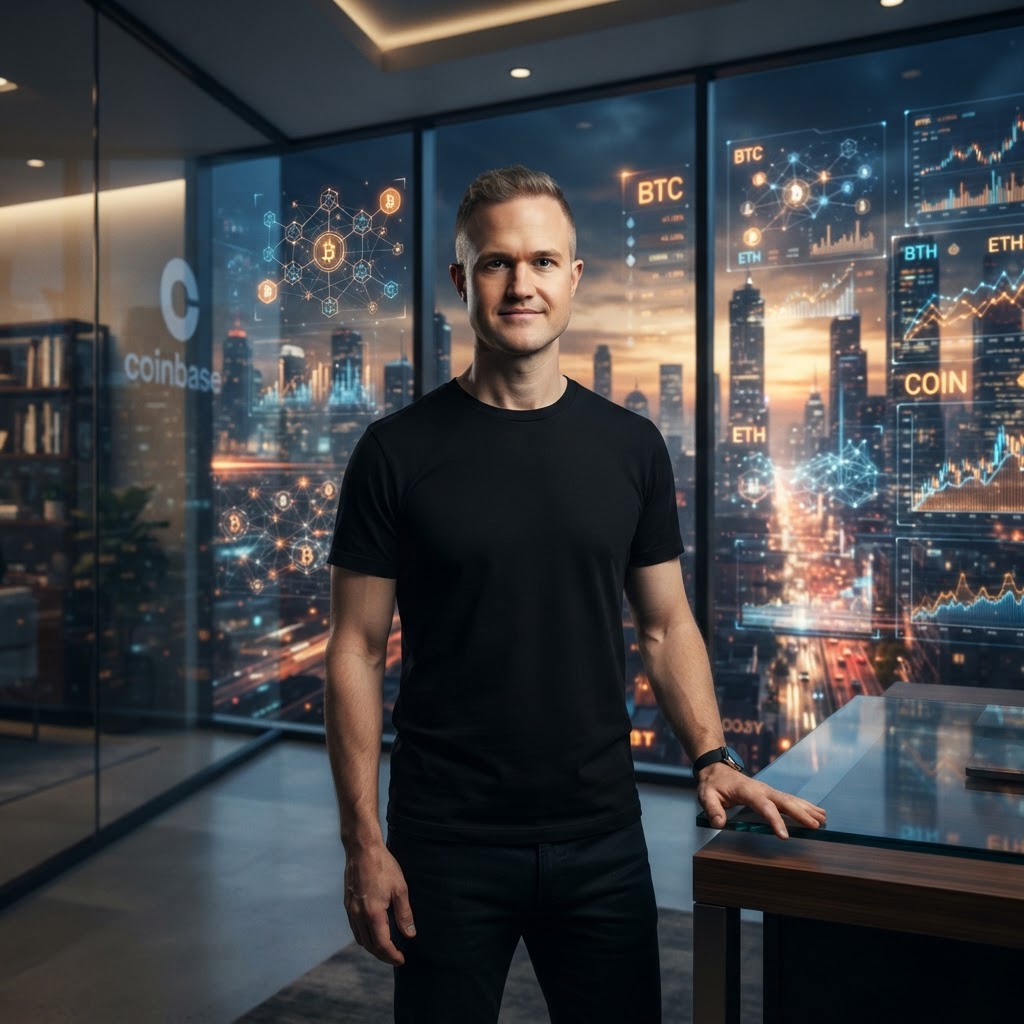
In the rapidly evolving world of blockchain technology, few figures command as much influence or respect as Brian Armstrong. As the co-founder and CEO of Coinbase, Armstrong has transformed a small startup into a cornerstone of the global financial system. His journey is not just one of corporate success, but a relentless pursuit of a vision: to increase economic freedom in the world by building a more open, transparent, and accessible financial system. Under his leadership, Coinbase has navigated the turbulent waters of market volatility and regulatory scrutiny, emerging as a standard-bearer for institutional-grade digital asset infrastructure.
The Genesis of a Digital Visionary
Brian Armstrong’s path to the top of the crypto world began long before Bitcoin became a household name. An alumnus of Rice University, where he studied computer science and economics, Armstrong possessed the rare combination of technical expertise and a deep understanding of market dynamics. His early career included a stint at IBM and a pivotal role at Airbnb, where he witnessed firsthand the complexities and inefficiencies of cross-border payments. It was during this period that he encountered the Bitcoin whitepaper, an experience he describes as a ‘revelation.’ The idea of a decentralized, peer-to-peer electronic cash system resonated with his belief that the world needed a financial protocol as open and borderless as the internet itself.
In 2012, Armstrong joined forces with Fred Ehrsam to launch Coinbase out of the Y Combinator incubator. At the time, Bitcoin was largely the domain of cypherpunks and niche tech enthusiasts. Armstrong’s genius lay in his realization that for crypto to go mainstream, it needed to be easy to use and safe to store. ‘Our goal from day one was to be the easiest place to buy and sell crypto,’ Armstrong once noted in an early interview. By focusing on user experience and, more importantly, regulatory compliance, Coinbase began to bridge the gap between the wild west of early crypto and the regulated world of traditional finance.
Navigating the Regulatory Frontline
Perhaps Brian Armstrong’s most significant impact on the industry has been his stance on regulation. Unlike many early crypto pioneers who sought to operate entirely outside the system, Armstrong embraced the idea that for digital assets to achieve mass adoption, they must coexist with existing legal frameworks. This philosophy has led Coinbase to become one of the most compliant exchanges in the world, securing licenses in dozens of jurisdictions. However, this path has not been without its challenges. In recent years, Armstrong has become a prominent voice in the battle for regulatory clarity in the United States.
The ongoing legal friction between Coinbase and the U.S. Securities and Exchange Commission (SEC) has defined a new era of crypto advocacy. Armstrong has been vocal in his criticism of ‘regulation by enforcement,’ arguing that the industry needs clear, written rules rather than shifting interpretations of decades-old laws. ‘We aren’t just fighting for Coinbase; we are fighting for the entire industry’s right to innovate in America,’ Armstrong stated during a public address following the SEC’s Wells Notice. His commitment to this cause led to the creation of the ‘Stand with Crypto’ initiative, a non-profit organization designed to mobilize the crypto community and advocate for sensible legislation in Washington D.C.
The Institutional Bridge and the ETF Milestone
One of Armstrong’s greatest achievements has been the successful onboarding of institutional capital into the crypto ecosystem. For years, the ‘institutional herd’ was a mythical concept in crypto circles, but Armstrong’s focus on custody solutions and professional-grade trading tools turned it into a reality. The culmination of this effort was seen in 2024 with the approval of Spot Bitcoin ETFs. Coinbase was selected as the custodian for the majority of these funds, including those from financial giants like BlackRock and Franklin Templeton. This wasn’t just a win for Coinbase’s balance sheet; it was a validation of Armstrong’s decade-long bet that institutions would eventually demand a regulated entry point into digital assets.
Innovation Beyond the Exchange: The Rise of Base
While Coinbase is best known as an exchange, Armstrong has always viewed it as a platform for the entire ‘on-chain’ economy. The launch of Base, an Ethereum Layer 2 network incubated by Coinbase, represents a major step in this direction. Base is designed to make transactions faster and cheaper, providing the infrastructure for developers to build decentralized applications (dApps) that can scale to millions of users. Armstrong has frequently emphasized that the next phase of crypto growth will come from utility, not just speculation. ‘The internet didn’t just change how we communicate; it changed how we build. Crypto will do the same for finance and ownership,’ he remarked during the Base mainnet launch.
By building a Layer 2, Armstrong is effectively shifting Coinbase from being a gateway to being a protocol participant. This move aligns with his vision of a decentralized future where Coinbase serves as a primary interface for a myriad of on-chain services, from decentralized finance (DeFi) to social media and gaming. The success of Base has already been significant, attracting billions in total value locked (TVL) and fostering a vibrant ecosystem of developers, further cementing Armstrong’s legacy as a builder of core infrastructure.
Economic Freedom and the Global Mission
At the heart of every decision Brian Armstrong makes is the concept of economic freedom. He defines this as the ability for individuals to participate in the global economy, secure their wealth, and transact without fear of censorship or excessive friction. Armstrong believes that blockchain technology is the ultimate tool for achieving this goal, particularly in regions with high inflation or limited access to banking. Under his leadership, Coinbase has expanded its global footprint, launching services in the UK, Europe, and parts of Asia and South America. ‘Crypto is a global technology, and our mission is global,’ he has stated. This mission-driven approach has allowed Coinbase to maintain a consistent direction even when market prices are volatile.
Armstrong’s leadership style is also notable for its focus on productivity and corporate culture. His 2020 blog post declaring Coinbase a ‘mission-focused’ company, which eschewed political and social activism within the workplace to focus on the company’s core goals, sparked widespread debate across the tech industry. For Armstrong, this was a necessary step to ensure the company remained agile and unified in its pursuit of building the new financial system. The resilience shown by the company in the years since suggests that this focus has paid dividends in terms of operational efficiency and strategic clarity.
The Future of the On-Chain Economy
As we look toward the future, Brian Armstrong shows no signs of slowing down. He continues to advocate for the integration of artificial intelligence and blockchain, exploring how AI agents might use crypto to transact and fulfill tasks autonomously. Furthermore, he remains a staunch supporter of privacy-preserving technologies and the advancement of stablecoins as a medium of exchange. His influence extends beyond the boardroom; as a thought leader, his public essays and social media presence often set the tone for the industry’s discourse on decentralization and corporate governance.
The legacy of Brian Armstrong is still being written, but his impact is already indelible. From a simple app to buy Bitcoin to a publicly-traded titan that powers the world’s largest financial institutions, his trajectory reflects the growth of the industry itself. By championing transparency, innovation, and the fundamental right to economic freedom, Armstrong has not only built a massive company but has also laid the groundwork for a future where the financial system is more equitable, efficient, and open to all. As the on-chain economy continues to expand, his role as the architect of this transition remains more vital than ever.