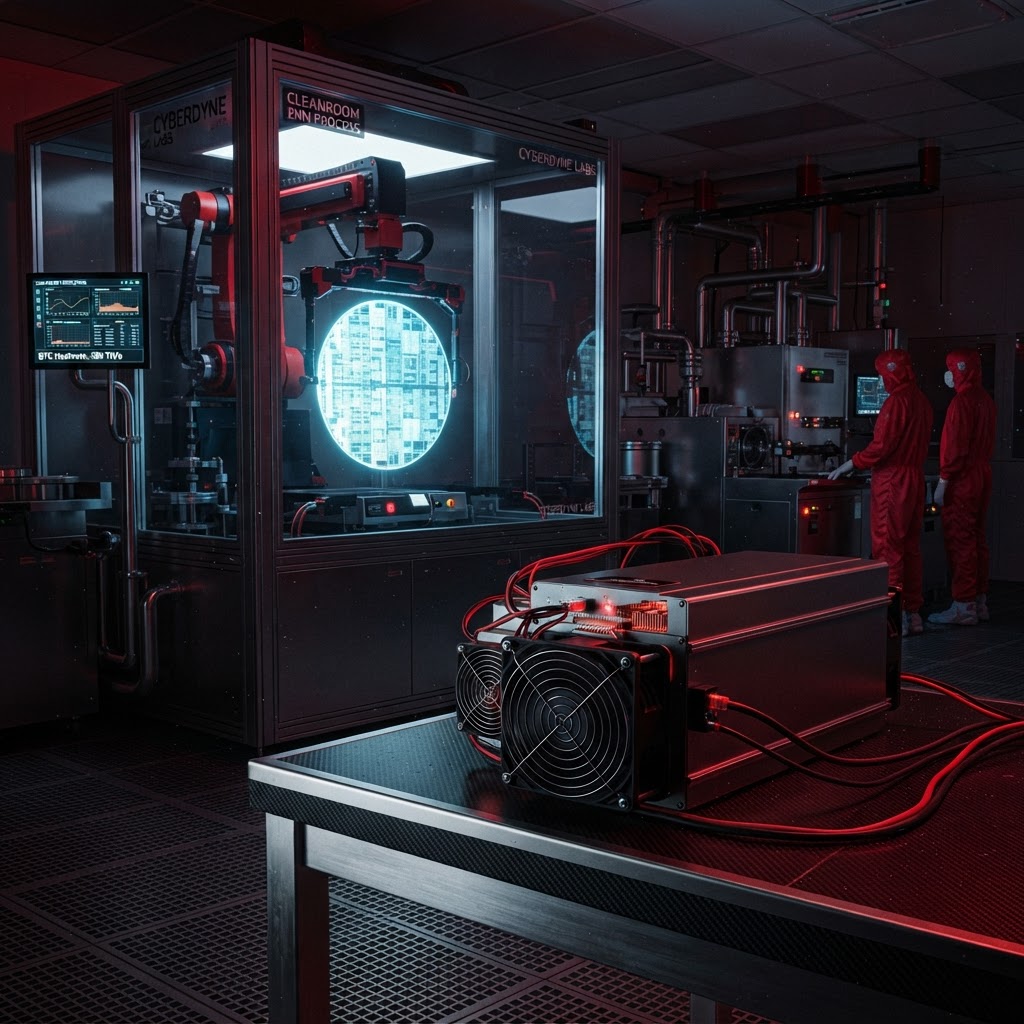
The global cryptocurrency mining landscape has reached a historic milestone with Bitmain, the world’s leading manufacturer of digital currency mining servers, officially announcing the launch of its latest flagship series: the Antminer S27. This new generation of Application-Specific Integrated Circuit (ASIC) miners represents more than just a seasonal upgrade; it signifies the commercial debut of 2-nanometer (2nm) semiconductor technology in the blockchain sector. With an industry-leading efficiency benchmark of 12.5 Joules per Terahash (J/T), the S27 series is poised to redefine the economics of Bitcoin mining in the post-2024 halving era.
The Technological Leap to 2nm Fabrication
At the heart of the Antminer S27 lies a custom-designed 2nm silicon architecture, developed in close collaboration with the world’s most advanced semiconductor foundries. The transition from 3nm and 5nm processes to 2nm is a feat of engineering that requires overcoming significant physical hurdles, particularly regarding gate-all-around (GAA) transistor structures and thermal management. By shrinking the feature size of the transistors, Bitmain has successfully crammed billions of additional gates onto each chip, allowing for significantly higher computational throughput while simultaneously reducing the energy required for each switching cycle.
“The S27 series is the culmination of three years of intensive R&D into sub-3nm architectures,” stated Dr. Liang Wei, Chief Technology Officer at Bitmain, during the product’s virtual unveiling. “We didn’t just want to build a faster machine; we needed to build a more sustainable one. The 12.5 J/T threshold was once thought to be a theoretical limit for air-cooled systems, but through architectural optimization and advanced power delivery systems, we have turned that theory into a commercial reality.” This move to 2nm allows the S27 to maintain higher hashrates without the proportional increase in heat generation that typically plagues smaller nodes, a critical factor for the longevity of mining hardware.
Setting a New Efficiency Benchmark
For miners, the most critical metric is efficiency—the amount of energy consumed to produce a specific amount of hashing power. The Antminer S27’s 12.5 J/T efficiency represents a nearly 30% improvement over the previous flagship Antminer S21, which operated in the 17.5 J/T range. In an environment where global electricity prices remain volatile and the Bitcoin network difficulty continues to climb toward all-time highs, this efficiency gain can be the difference between a profitable operation and one that is forced to shut down. The S27 series is expected to come in several configurations, including the S27 XP and the S27 Hydro, with the latter potentially pushing efficiency even further through the use of liquid cooling systems that reclaim heat for industrial or residential use.
Infrastructure and Power Density
The introduction of the S27 series necessitates a reevaluation of mining farm infrastructure. While the physical footprint of the units remains similar to the S21 and S19 series, the power density and cooling requirements have evolved. The S27 utilizes an upgraded APW17 power supply, designed to handle the rapid load fluctuations inherent in high-performance mining. Furthermore, the integrated firmware features enhanced “intelligent energy-saving” modes, allowing miners to down-clock the machines during periods of high electricity costs or peak grid demand without risking hardware instability. This adaptability is increasingly important as mining operations integrate with renewable energy grids and participate in demand-response programs across North America and the Middle East.
Market Impact and Competitive Pressure
The launch of the S27 comes at a time when competition among hardware manufacturers is at its peak. Rival firms like MicroBT and Canaan have also been teasing sub-20 J/T machines, but Bitmain’s leap to 12.5 J/T sets a high bar that may take competitors months or even years to match at scale. Industry analysts suggest that this release will trigger a massive hardware refresh cycle. Large-scale, publicly traded mining firms such as Marathon Digital, Riot Platforms, and CleanSpark are likely to be the first in line for bulk orders as they seek to lower their fleet-wide break-even costs. For these giants, upgrading to 2nm technology is not just about performance—it’s about survival in an increasingly competitive hashrate market.
“We are seeing a divergence in the mining market,” explains Marcus Thorne, a senior mining analyst at Hashrate Index. “The ‘Efficiency Gap’ between the top-tier miners using S27-class hardware and those still running S19s is becoming a chasm. Those who cannot secure the latest 2nm tech will find themselves at a structural disadvantage, especially as the network hashrate likely surges following the deployment of these units. Bitmain has effectively shortened the lifecycle of 5nm machines overnight.” This shift could also lead to a secondary market boom for older hardware, as smaller-scale miners in regions with ultra-low electricity costs snap up discounted S19s and S21s.
The Road to a Greener Hashrate
Beyond the raw numbers, the Antminer S27 series carries significant implications for the environmental, social, and governance (ESG) profiles of Bitcoin mining companies. By producing more hashes for every kilowatt-hour consumed, the S27 effectively lowers the carbon footprint per transaction processed on the Bitcoin network. Bitmain has also emphasized the use of recyclable materials in the S27’s chassis and fans, part of a broader corporate initiative to address the electronic waste concerns associated with the rapid turnover of ASIC hardware. As institutional investors continue to scrutinize the environmental impact of crypto assets, the deployment of 12.5 J/T hardware provides a tangible metric for sustainability progress.
Logistics and Availability
Bitmain has indicated that shipping for the first batch of Antminer S27 units is scheduled to begin in Q4 2024, with priority given to long-term strategic partners. The pricing model for the S27 is expected to follow a “price-per-hashrate” structure that reflects the premium nature of the 2nm silicon. However, the company has also introduced a new financing program to assist mid-sized mining operations in transitioning to the new series, acknowledging the high capital expenditure required for a full fleet overhaul. This move is seen as an attempt to maintain a degree of decentralization in the mining sector, preventing the most efficient hardware from being entirely monopolized by the largest five or ten players in the industry.
The Technical Challenges of Deployment
While the S27 offers groundbreaking efficiency, it is not a “plug-and-play” solution for all environments. The extreme precision of the 2nm chips makes them more sensitive to environmental contaminants and humidity. Bitmain has redesigned the internal airflow path of the S27 to include a multi-stage filtration system, but operators are still advised to maintain high-standard data center conditions. For mines located in harsh environments, such as the dusty plains of West Texas or the humid climates of Southeast Asia, the hydro-cooled version of the S27 is expected to be the preferred choice, offering a sealed environment that protects the delicate 2nm wafers from external elements while providing superior heat dissipation.
The integration of the S27 into existing mining pools also presents new data management challenges. The sheer volume of share submissions from a single S27 unit—estimated to be significantly higher than previous generations—requires mining pools to optimize their stratum protocols to prevent latency issues. Bitmain has already begun working with major pools like Antpool and Foundry USA to ensure that the networking stacks are ready for the influx of high-efficiency hashrate. This collaboration ensures that as soon as the first units are racked, they can begin contributing to network security with minimal downtime or orphaned blocks.
As the Bitcoin network approaches its 20th year, the evolution of mining hardware remains the primary engine driving its security and decentralization. The Antminer S27 stands as a testament to the relentless pace of innovation in the semiconductor industry, proving that even as we reach the physical limits of silicon, there is still room for massive gains in efficiency. For the global mining community, the message is clear: the 2nm era has arrived, and the race to 12.5 J/T is officially on.