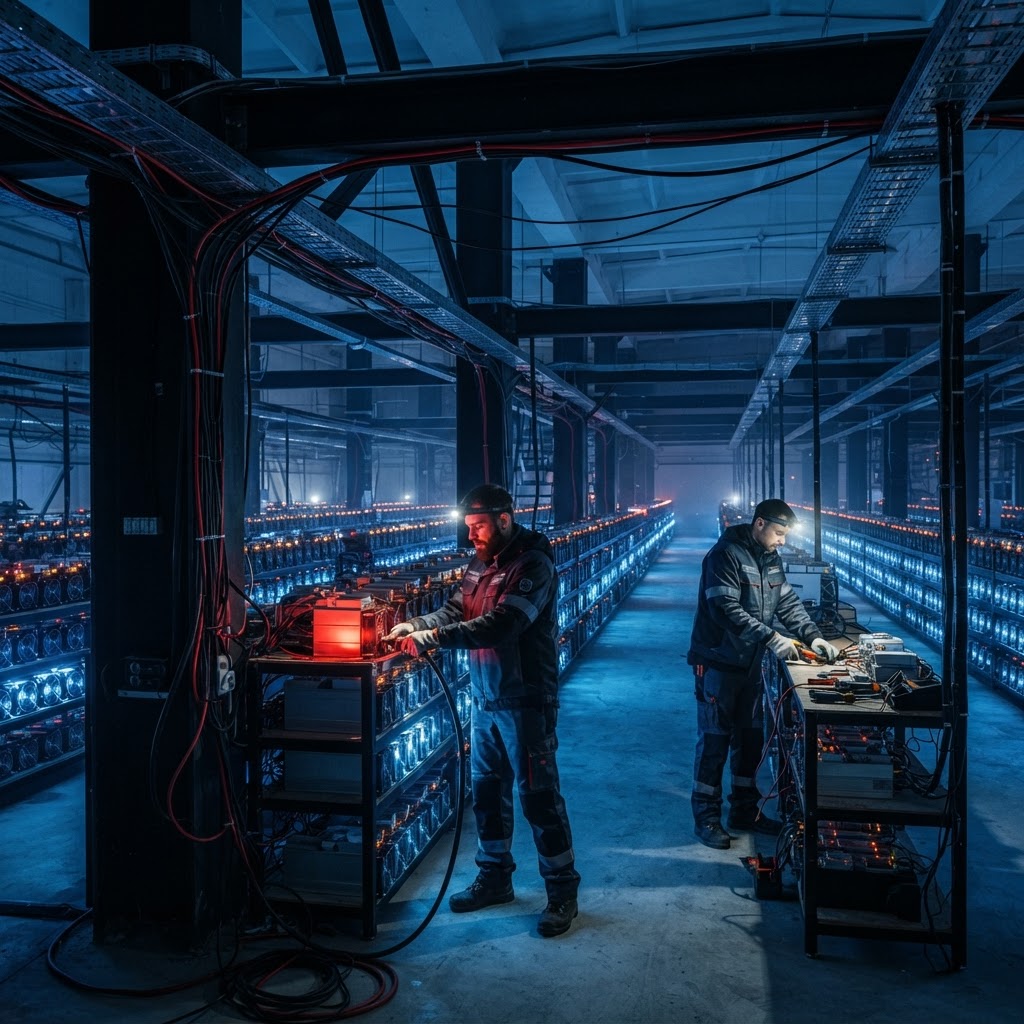
In a move that has sent shockwaves through the international mining community, the Russian government has officially expanded its regional crackdown on digital asset extraction. According to Russia bans Moscow crypto mining from Aug. 15, Prime Minister Mikhail Mishustin has signed Government Resolution No. 936, which imposes a comprehensive ban on cryptocurrency mining in Moscow, the Moscow Region, and significant portions of the Kursk Region. The restrictions are set to take effect on August 15, 2026, and will remain in force until December 31, 2032, marking one of the longest-duration regional prohibitions in the history of the industry.
The Legislative Hammer: Resolution 936 and the 2032 Horizon
The new decree represents a significant pivot from Russia’s earlier stance in 2024, when the country moved to legalize and regulate the mining sector to facilitate cross-border payments. However, the reality of energy consumption has forced a tactical retreat. As noted in Russia Bans Crypto Mining in Moscow, Kursk Through 2032 to Protect Power Grid, the ban is not merely a temporary measure but a long-term strategic decision aimed at safeguarding the stability of the capital’s power infrastructure. The resolution specifically targets both individual mining operations and participation in mining pools, effectively criminalizing the act of contributing hashrate to the network from these specific geographic zones.
The Moscow Energy Crisis: 1 GW of Digital Demand
The technical justification for the ban lies in the sheer scale of energy consumption within the Moscow metropolitan area. The region currently hosts approximately 65 large-scale data centers with a combined capacity of 734 MW. However, regional energy officials estimate that the actual demand from cryptocurrency mining—including both registered industrial facilities and “gray” residential miners—is approaching one gigawatt. According to Russia Imposes Crypto Mining Ban in Moscow Until 2032, the Ministry of Energy warned that connecting further large-scale facilities risks creating acute electricity shortages, potentially leading to blackouts for households and essential businesses. “We are seeing a situation where the growth of the digital economy is outpacing the growth of our physical infrastructure,” stated a senior energy consultant in Moscow. “The grid was never designed to handle the constant, high-intensity load of modern ASIC clusters at this density.”
The Kursk Factor: Mining on the Strategic Frontier
The inclusion of the Kursk Region in the ban is particularly noteworthy. The restrictions cover nine designated territories within the region, which sits near the border with Ukraine. As reported by Russia expands crypto mining ban to Moscow and Kursk regions, the decision here is driven by a combination of energy security and geopolitical stability. The Kursk Nuclear Power Plant is a critical node in the national grid, and authorities are keen to ensure that no “uncontrolled” energy consumption interferes with the strategic management of power in the borderlands. The ban in Kursk, like that in Moscow, is scheduled to last until the end of 2032, suggesting that the government expects energy constraints to persist for the foreseeable future.
Hardware Evolution: The Survival of the Most Efficient
For the mining community, the Moscow ban serves as a catalyst for a new era of hardware efficiency. With the ban looming in 2026, industrial miners are already looking to upgrade their fleets to the most efficient machines available to maximize their remaining time in the region. The focus has shifted entirely to Joules per Terahash (J/TH). The latest releases from Bitmain, such as the Antminer S21 Pro, which boasts an efficiency of 15 J/TH, and MicroBT’s Whatsminer M60 series, are becoming the standard for those looking to maintain profitability under tightening regulatory and energy constraints. “In a world where you might be forced to move your entire operation in 24 months, every watt counts,” says Alexey Petrov, a technical lead at a Moscow-based mining firm. “We are seeing a massive shift toward liquid and immersion cooling systems, not just for the overclocking potential, but for the ability to repurpose waste heat, which some hope might eventually grant them exemptions from future bans.”
Mining Pool Prohibition: A Technical Enforcement Challenge
One of the most controversial aspects of Resolution 936 is the explicit ban on “participation in mining pools.” This represents a sophisticated attempt to curb mining at the network level. Unlike physical hardware, which can be hidden, pool participation involves consistent communication between the miner and a central server. Russian ISPs may be required to implement deep packet inspection (DPI) to identify and throttle traffic associated with known mining pool protocols like Stratum V2. This technical hurdle is expected to drive many smaller operators toward decentralized mining protocols or the use of advanced VPN and tunneling technologies to mask their activity, though the legal risks under the new decree are substantial.
The Great Siberian Migration: Seeking Cheap Kilowatts
The immediate consequence of the Moscow ban is the beginning of a “Great Migration” of hashrate toward the eastern regions of Russia. Areas like Irkutsk and Krasnoyarsk, which benefit from massive hydroelectric projects and a naturally cold climate, are becoming the new hubs for displaced Moscow miners. These regions offer electricity prices that are significantly lower than the capital, often below $0.03 per kWh for industrial users. However, the influx of hardware is already putting pressure on these local grids as well. As noted in Russia Drafts 6 Year Crypto Mining Ban Across Moscow Starting July 2026, the government has already introduced bans in 10 other regions, including Dagestan and Chechnya, starting in early 2025. This suggests that the “safe havens” for mining in Russia are shrinking, forcing operators to consider international relocation to countries like Kazakhstan, Ethiopia, or even the United Arab Emirates.
Economic Impact: ROI and the 1.3 Billion Ruble Loss
The economic stakes are high for both the state and the private sector. The national grid operator, Rosseti, reported losses exceeding 1.3 billion rubles in 2024 due to unauthorized or “gray” mining operations that bypass industrial meters. By banning mining in the most densely populated regions, the government hopes to recoup these losses and force the industry into a more transparent, industrial model located in energy-surplus zones. For miners, the ROI (Return on Investment) calculations have been completely upended. A machine purchased today must now account for the potential costs of decommissioning, transport, and re-installation in a new province before the 2026 deadline. This has led to a cooling of the secondary market for older, less efficient hardware like the Antminer S19 series, which are increasingly seen as liabilities in a high-cost, high-regulation environment.
Global Hashrate and Network Difficulty
From a global perspective, the removal of Moscow’s hashrate—estimated to be several exahashes—could lead to a temporary dip in Bitcoin’s network difficulty. However, history has shown that hashrate is incredibly resilient. Much like the 2021 Chinese mining ban, the Russian regional restrictions are likely to result in a redistribution of power rather than a permanent reduction. As Moscow-based rigs go offline in August 2026, the global network will likely see a corresponding spike in hashrate in other jurisdictions as those machines are plugged back in. The technical sophistication of the Russian mining community means that this transition will likely be managed with high efficiency, utilizing modular data center designs that can be transported via rail to the heart of Siberia or beyond.