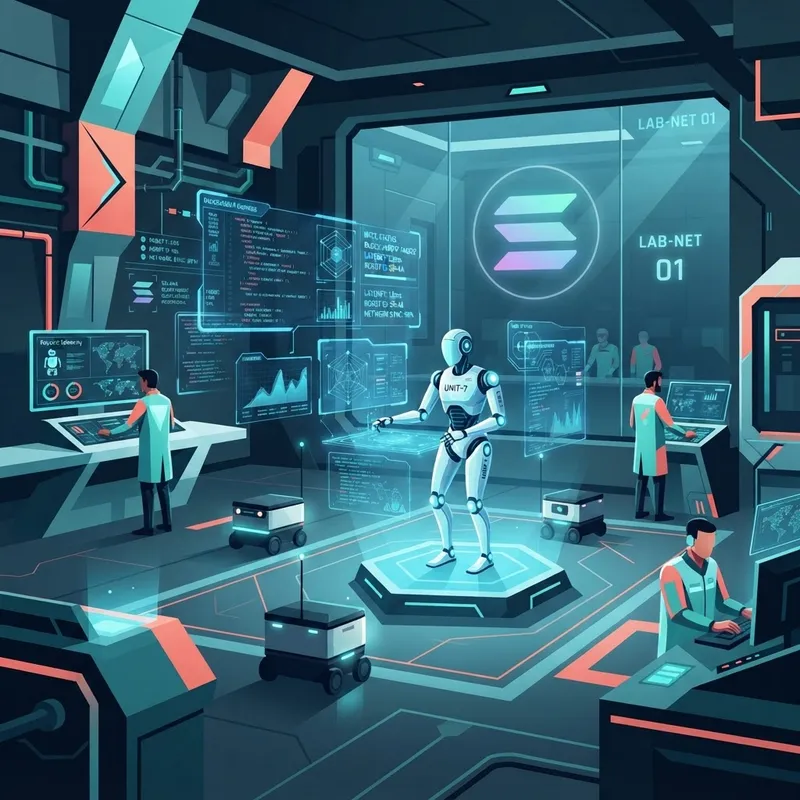
In the rapidly evolving landscape of decentralized physical infrastructure networks (DePIN) and artificial intelligence, a new heavyweight has emerged to bridge the gap between digital intelligence and physical reality. BitRobot, a crypto-incentivized platform co-developed by the visionary teams at FrodoBots Lab and Protocol Labs, is officially stepping into the spotlight. With a mission to advance Embodied Artificial Intelligence (AI) through a decentralized, subnet-based architecture on the Solana blockchain, BitRobot represents one of the most ambitious attempts to date to decentralize the future of robotics.
The Convergence of Silicon and Steel
For years, the AI revolution has been largely confined to the digital realm. Large Language Models (LLMs) and generative image tools have transformed how we process information and create art, but the transition of this intelligence into the physical world—known as Embodied AI—has remained a significant hurdle. The primary bottleneck is not just raw compute power, but the lack of diverse, high-quality, real-world data. While text-based AI can scrape the entire internet for training, robots require physical interaction data that is notoriously difficult and expensive to collect in closed laboratory environments.
Enter BitRobot. By leveraging the coordination power of blockchain technology, BitRobot is turning the entire world into a laboratory. The network coordinates real-world robots, ranging from small sidewalk delivery units to complex humanoids, to collect data, train models, and validate performance in diverse environments. This decentralized approach allows for a scale of data collection that no single corporation or research lab could achieve alone.
A Strategic Alliance and $8 Million in Funding
The momentum behind BitRobot is backed by significant capital and industry expertise. FrodoBots Lab recently announced it has raised $6 million in a seed round, bringing its total aggregate funding to $8 million. This round was led by Protocol VC, with participation from a literal who-is-who of the crypto and AI venture space, including Big Brain Holdings, Fabric Ventures, Zee Prime Capital, Tioga Capital, Sfermion, Solana Ventures, and Virtuals Protocol. Perhaps most notably, the project has garnered the support of angel investors like Solana Labs co-founders Anatoly Yakovenko and Raj Gokal, as well as founders from leading DePIN projects such as Aethir and Gensyn.
“BitRobot represents an ambitious effort for the crypto world to make a meaningful difference in the pursuit of Embodied AI,” said Michael Cho, co-founder of BitRobot, during a recent industry keynote. “The team at FrodoBots Lab has already made significant in-roads with multiple deployments, and by partnering with Protocol Labs, we are combining world-class decentralized storage and coordination with cutting-edge robotics research. We aren’t just building a network; we are building the world’s first open robotics lab.”
Architecture: The Subnet Revolution on Solana
At the heart of BitRobot is a sophisticated subnet-based architecture built on the Solana blockchain. Solana was chosen for its high throughput and low latency, which are critical for the real-time coordination of physical hardware. Each subnet within the BitRobot ecosystem is designed to contribute a specific, valuable output to the broader network. These outputs include raw compute resources, real-world robot fleets, curated datasets (both real and synthetic), and specialized AI models optimized for various robotic tasks.
The network operates through a series of phases and monthly epochs. Subnets coordinate robotic missions—such as mapping a specific urban area or training a humanoid to navigate a complex warehouse—and contributors are rewarded based on the verified impact of their data. This verification layer is crucial; BitRobot utilizes a decentralized verification system to ensure that the data collected by robots in the field is accurate, high-quality, and useful for model training. This prevents the “garbage in, garbage out” problem that plagues many crowdsourced data initiatives.
Embodied AI: Beyond the Chatbot
The term “Embodied AI” refers to artificial intelligence that has a physical body and interacts with the environment. Unlike a chatbot that exists on a server, an embodied AI must understand physics, spatial relationships, and real-time sensory input. BitRobot’s insight is that data from any specific use case—whether it’s a sidewalk robot avoiding a puddle or a robotic arm sorting mail—improves the foundational models for all use cases. This cross-domain learning is the key to achieving “General Purpose Robotics.”
Juan Benet, founder of Protocol Labs, highlighted the importance of this synergy: “By combining decentralized storage with high-performance blockchain coordination, we are building the foundation for the next generation of physical intelligence. BitRobot is the platform where the collective intelligence of the community meets the physical challenges of the real world. It is a massive step forward for the Filecoin and IPFS ecosystems as they become the storage backbone for petabytes of robotics data.”
Real-World Missions and the $5 Million Prize Pool
BitRobot is already moving out of the lab and into the streets. One of the featured updates from the project, titled “Inside the Lab: SN/01 – ET Fugi,” details a mission to map the world’s sidewalks using a fleet of specialized robots. These robots aren’t just taking pictures; they are creating high-fidelity 3D maps and training AI models to recognize obstacles, pedestrian patterns, and environmental hazards. This data is invaluable for the future of autonomous delivery and urban planning.
To accelerate this progress, the BitRobot Foundation has launched a series of “bold, measurable challenges” with a total prize pool of $5 million. Currently, there are three active challenges accepting entries, inviting researchers, hobbyists, and robotics startups to contribute to the network. These challenges focus on solving specific bottlenecks in robotics, such as low-latency remote operation and robust object manipulation in unstructured environments.
The Ambassador Program and Global Participation
Recognizing that a global robotics network requires a global community, BitRobot has launched an Ambassador Program. This initiative seeks to empower individuals around the world to help deploy and maintain the physical nodes of the network—the robots themselves. Ambassadors act as the bridge between the digital protocol and the physical streets, ensuring that the hardware is operational and the data collection missions are successful. This decentralized deployment model bypasses the logistical nightmares that usually prevent robotics companies from scaling globally.
The BitRobot whitepaper, published in early 2025, outlines a roadmap that includes the launch of more diverse subnets, including those focused on humanoid robotics and aerial drones. The project’s philosophy is built on the idea that robotics breakthroughs won’t come from a single, closed lab, but from a coordinated collective. By providing the economic incentives through crypto and the technical infrastructure through Solana and Protocol Labs, BitRobot is positioning itself as the central hub for the next decade of robotics innovation.
The Future of the Open Robotics Lab
As the network grows, the data collected by BitRobot will be used to train increasingly sophisticated models that are then made available to the community. This creates a virtuous cycle: more robots lead to more data, which leads to better models, which in turn makes the robots more capable and valuable. In a world where AI is often criticized for being centralized in the hands of a few tech giants, BitRobot offers a compelling alternative—a future where the infrastructure of physical intelligence is owned and operated by the people who build and use it. With $8 million in fresh capital and a partnership with some of the brightest minds in the industry, BitRobot is well on its way to making the “Open Robotics Lab” a reality.