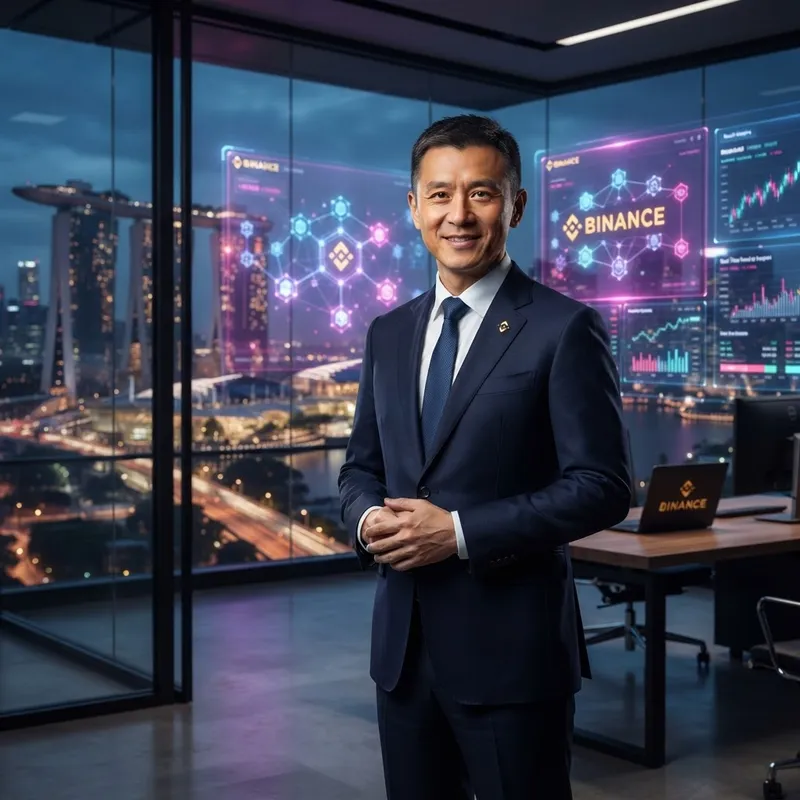
In the high-stakes world of cryptocurrency, where the pendulum often swings between radical innovation and regulatory scrutiny, few figures embody the industry’s current evolution as precisely as Richard Teng. Appointed as the Co-CEO of Binance in November 2023, Teng stepped into one of the most challenging roles in the digital asset space. Succeeding the exchange’s charismatic founder, Changpeng Zhao, Teng was tasked with more than just maintaining market dominance; he was hired to lead a cultural and operational overhaul of the world’s largest cryptocurrency exchange. His background as a seasoned regulator in Singapore and Abu Dhabi provided the perfect pedigree for a company seeking to move past its ‘move fast and break things’ origins and into a new era of global compliance and institutional maturity.
The Crucible of Singaporean Regulation
Richard Teng’s journey to the pinnacle of the crypto world began in the disciplined corridors of Singapore’s financial regulatory bodies. A native of Singapore and a graduate of the prestigious Wharton School, Teng spent over a decade at the Monetary Authority of Singapore (MAS). It was here that he developed the rigorous analytical framework that would later define his leadership style. As noted in recent profiles, his early years at MAS were formative. He often recounts a story of his first supervisor, Tan Kim Kway, who returned one of Teng’s early submissions covered in red ink, with three pages crossed out entirely. The feedback was blunt: “You have not analysed it. There’s no thought process. The writing is terrible.” This experience, according to Tatler Asia, instilled in him a commitment to depth and precision that he carries to this day.
Teng’s influence in Singapore extended to the Singapore Exchange (SGX), where he served as the Chief Regulatory Officer. In this role, he worked closely with MAS to maintain a fair and transparent market, overseeing policy formulation and rule enforcement for listing, trading, and clearing. His work at SGX was instrumental in upholding Singapore’s reputation as a premier global financial hub. By the time he left the Singaporean public sector, Teng had become a key architect of the region’s financial stability, a reputation that would eventually make him an attractive candidate for the burgeoning blockchain sector.
Building the Desert Oasis: The ADGM Years
In 2015, Teng took his expertise to the United Arab Emirates, where he became the CEO of the Financial Services Regulatory Authority at Abu Dhabi Global Market (ADGM). His mission was to build a world-class regulatory framework from the ground up. Under his leadership, ADGM became a pioneer in digital asset regulation, creating one of the first comprehensive frameworks for crypto businesses in the world. Teng recognized early on that for blockchain technology to achieve mainstream adoption, it needed a clear, predictable regulatory environment. “I realized the huge potential in decentralized technology as early as 2017,” Teng remarked in a 2025 interview with Investment Reports. “But I also knew that without the trust of regulators and institutional investors, that potential would remain untapped.”
His success in Abu Dhabi transformed the region into a hub for venture capital and fintech innovation. By the time he joined Binance in August 2021, initially as the CEO of its Singapore operations, he was already regarded as one of the few individuals who could speak the languages of both traditional finance and the decentralized web. His ascent within Binance was rapid, moving from Singapore CEO to Regional Head of MENA, and eventually to Head of Regional Markets, where he oversaw the exchange’s operations across Asia, Europe, and the Middle East.
The $4.3 Billion Pivot and the Call to Lead
The turning point for both Binance and Teng came in late 2023. Following a historic settlement with U.S. authorities, which included a $4.3 billion fine and the departure of Changpeng Zhao, the exchange needed a leader who could provide “assurance to regulators on the shape and form and the direction of travel for the company,” as Teng later told CoinDesk. Teng was the natural choice. His appointment signaled to the global financial community that Binance was ready to embrace a new chapter of accountability.
Since taking the helm, Teng has focused on three core pillars: restoring user trust, collaborating with regulators, and driving institutional adoption. One of his first major initiatives was a massive investment in the company’s compliance infrastructure. In 2022 alone, Binance invested $152 million in compliance, a figure that has only grown under Teng’s leadership. “Compliance is not a hurdle; it is the foundation upon which the next billion users will be onboarded,” Teng recently stated during a forum in Brazil. This shift is evident in the company’s efforts to secure licenses in jurisdictions ranging from Dubai to Thailand and its ongoing cooperation with global law enforcement to combat financial crime.
The Global Headquarters Dilemma
One of the most significant shifts under Teng’s leadership has been the move away from Binance’s original “decentralized” office model. For years, the exchange operated without a formal global headquarters, a point of contention for regulators worldwide. Teng has acknowledged that this must change. “We have not decided on the global headquarter issue. It is very important, it is very complex,” he explained in a 2024 interview. “We need to be quite thoughtful in understanding the impact on the various stakeholders, including regulation and taxation consequences.” By seeking a physical home, Teng is effectively bringing Binance into the fold of traditional corporate governance, a move he compares to establishing a board of directors to provide oversight and transparency.
Bridging the Gap to Institutional Adoption
Teng’s vision for Binance extends beyond mere survival; he is positioning the exchange as the primary bridge for institutional capital entering the crypto space. In a 2026 interview with Mastercard, Teng outlined a future where crypto adoption is fueled by financial inclusion and strategic partnerships. He believes that stablecoins and traceable blockchain technology are the keys to replacing inefficient legacy banking systems. “People fail to realise that it’s a totally traceable technology,” Teng told Tatler Asia, contrasting the transparency of the blockchain with the often-opaque nature of fiat currency transactions.
Under his guidance, Binance has doubled down on its efforts to cater to institutional clients, offering sophisticated trading tools and custody solutions that meet the high standards of traditional hedge funds and asset managers. This focus is paying off, as the exchange continues to see record inflows despite the regulatory headwinds facing the broader industry. Teng’s ability to navigate these complexities while maintaining the exchange’s core mission of financial freedom is perhaps his greatest achievement to date. He remains a vocal advocate for the transformational growth of crypto, frequently speaking at global forums about how clear regulation can actually foster innovation rather than stifle it.
A Vision for the Next Decade
As Binance approaches its next decade, Richard Teng’s influence is visible in every facet of the organization. The company is no longer just a platform for retail traders; it is becoming a cornerstone of the global financial infrastructure. Teng’s leadership style—characterized by a blend of regulatory rigor and a deep belief in the power of Web3—has provided a stabilizing force during a period of unprecedented volatility. Whether he is discussing the potential of Hong Kong to become a global crypto hub or highlighting the dedication of his teams in Brazil, Teng’s message remains consistent: the future of finance is digital, and that future must be built on a foundation of trust and transparency. By transforming Binance from a disruptive startup into a regulated global powerhouse, Richard Teng is not just saving an exchange; he is helping to define the very future of the blockchain industry itself.